
Yashasvi Jaiswal vs Asitha Fernando: Where Should Cricket Draw the Line?
When Yashasvi Jaiswal’s aggression crossed cricket’s line
 IN
Sat, Oct 10, 2026 | 03:11 AM IST
IN
Sat, Oct 10, 2026 | 03:11 AM IST


Cricket needs aggression. But does it need players getting in each other’s faces?
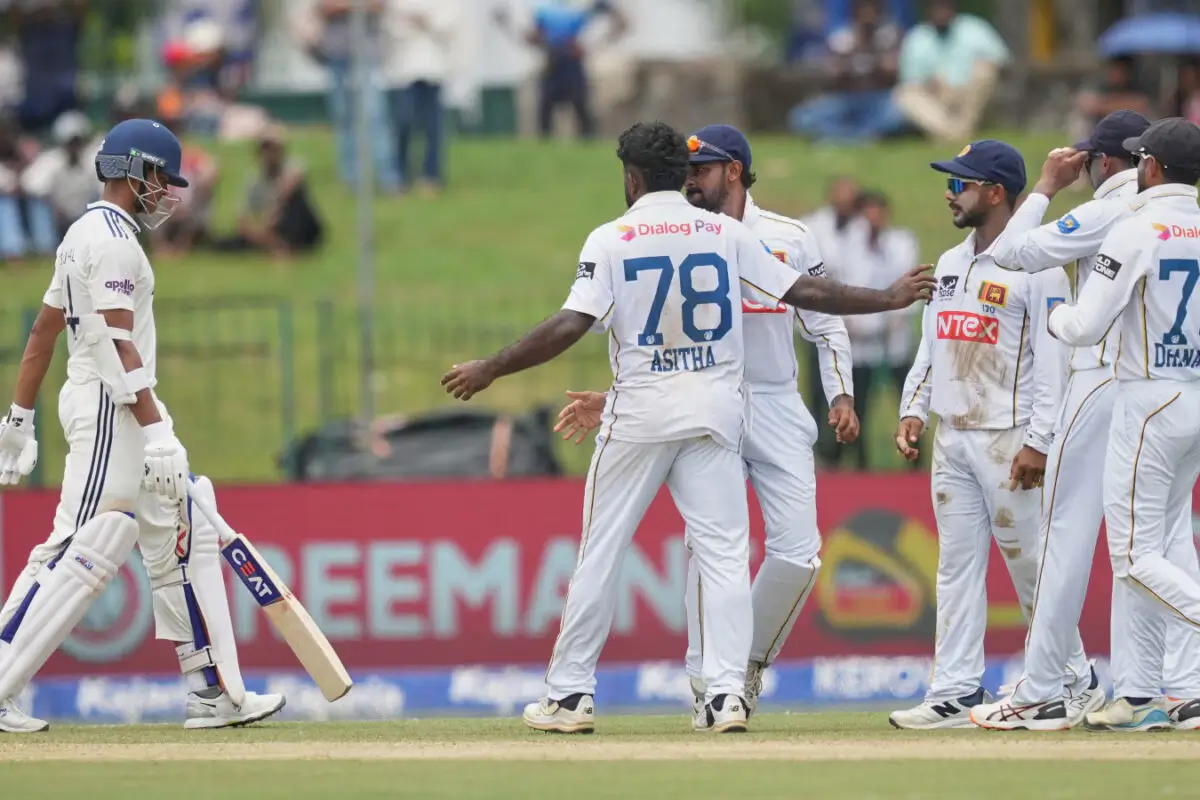
That question has followed Yashasvi Jaiswal since an ugly confrontation with Sri Lanka pacer Asitha Fernando during the second India vs Sri Lanka Test match in Colombo. Jaiswal had just been dismissed for 45 after striking three boundaries in Fernando’s over when an animated send-off turned into a heated exchange, with the two players making apparent head contact. Both were later sanctioned by the ICC.
The controversy that arose during India vs Sri Lanka match, however, is not as simple as deciding who was right or wrong.
Jaiswal says there was something said to him that viewers did not hear. Former Indian cricketers have criticised his response. And a fresh video angle circulating on August 25 has now raised further questions about how the confrontation unfolded.
In short: Jaiswal and Fernando were both punished for inappropriate physical contact, but the debate continues over provocation, accountability and how much aggression is acceptable in international cricket.
The incident came during the 17th over of India’s innings in the Colombo Test.
Jaiswal had looked comfortable at the crease and struck Fernando for three boundaries in the over before the Sri Lankan pacer dismissed him. Yashasvi Jaiswal made 45 from 53 balls, with nine fours.
After the wicket, Asitha Fernando gave the Indian opener an animated send-off. Jaiswal initially walked away but then turned back towards the bowler. The two exchanged words before moving close to each other. Their heads appeared to make contact, and players from both sides stepped in to separate them.
The moment was quickly described as a “headbutt” in several reports. However, the exact intent behind the contact is harder to establish from the footage alone.
That distinction matters.
Img Src : News18
Jaiswal did not simply accept the criticism.
Responding to a Cricbuzz video featuring commentator Harsha Bhogle, he said people should not judge the incident without knowing what Fernando had said. He claimed that Fernando had crossed the line and added that India would “fight and reply” when that happened.
His argument raises a fair point: cameras can show the physical confrontation, but they cannot necessarily capture every word exchanged between two players.
But context and justification are not always the same thing.
A player can have a genuine reason to be angry and still respond poorly.
The ICC did not treat the episode as a one-sided offence.
Its official statement said both players breached Article 2.12 of the Code of Conduct, which covers inappropriate physical contact during an international match. Jaiswal and Fernando were each fined 25% of their match fees and given one demerit point. Both admitted the offences and accepted the sanctions proposed by match referee Andy Pycroft.
The ICC’s account said Jaiswal walked towards Fernando after the dismissal, the two exchanged words, Fernando moved his head towards Jaiswal and Jaiswal then leaned in, resulting in head contact.
So officially, both players were held responsible.
That is an important detail when the incident is discussed as though Jaiswal alone was at fault.
Former India batter Cheteshwar Pujara drew a clear line between emotion and physical confrontation.
Pujara said players can get angry and heated exchanges do happen in cricket. But, in his view, once the situation resulted in body contact, it became unacceptable. His message was essentially that players must learn to control their emotions.
Former India selector Saba Karim was even more direct. He described the incident as “extremely puerile” and stressed that cricket is not a contact sport. His other concern was the influence international cricketers have on young fans.
Former India coach WV Raman offered a different explanation. He suggested frustration may have contributed to Jaiswal’s reaction. The opener had failed to convert a promising start in the first Test and was again dismissed after getting set in Colombo. Raman said some of that frustration may have spilled over.
That is useful context, but it remains an interpretation rather than an established reason for Jaiswal’s behaviour.
Just when the controversy appeared settled, a fresh development has reopened the discussion.
A new video angle circulating on August 25 has prompted questions about the ICC’s description of the confrontation. India Today reported that the footage appeared to challenge the statement that Fernando moved his head towards Jaiswal before Jaiswal leaned in. Sri Lankan journalist Andrew Fidel Fernando went further, accusing the ICC of giving an inaccurate account of the incident.
Those are allegations, not established findings.
The new footage does not change the fact that both players accepted the ICC sanctions. But it does make one thing clearer: assigning sole blame from a short clip is difficult when the complete verbal exchange and every movement are not known.
For now, the ICC’s disciplinary decision stands.
This is where the IND vs SL controversy becomes bigger than one heated exchange.
Aggression has always been part of cricket.
Fast bowlers intimidate batters. Batters stare them down. Send-offs happen. Sledging happens. Players try to get into each other’s heads.
That competitive edge is part of Test cricket.
But there is a difference between aggression and physical confrontation.
Jaiswal’s intensity is one of the qualities that makes him exciting to watch. The answer is not to make him emotionless or passive.
The challenge is to ensure that his aggression remains under his control.
Yes - but only to a point.
If Fernando did say something that crossed a line, it would explain why Jaiswal reacted. India batting coach Sitanshu Kotak acknowledged that emotions appeared to have boiled over, while also saying Jaiswal should not have gone so close to Fernando.
That is perhaps the fairest way to look at it.
Provocation can explain a reaction. It does not automatically excuse it.
At the same time, criticism of Jaiswal should not erase the fact that the ICC sanctioned both players.
The incident has also revived discussion around Jaiswal’s temperament.
During the first Test between IND vs SL, he was involved in verbal banter with Sri Lankan wicketkeeper-batter Niroshan Dickwella. That exchange remained within the realm of cricketing theatre, but it showed the same competitive personality.
There is also a current cricketing context. Jaiswal has been getting starts without consistently converting them into big scores, something Raman highlighted when discussing the possible frustration behind the Colombo incident.
None of this proves that his batting form caused the confrontation.
It does, however, raise a useful question: Is Jaiswal’s aggression still working for him, or does he need to become better at deciding when to rein it in?
The boundary may be simpler than the controversy suggests.
Aggressive cricket? Yes.
Competitive banter? Within limits.
A fiery send-off? Part of the game.
Standing up to an opponent? Absolutely.
Physical confrontation? That is where the game should stop.
That does not mean players should become emotionless. It means they should understand that emotional control is also part of elite sport.
For Cheteshwar Pujara, that control is precisely what Jaiswal needs to learn. And for a young star watched by millions, the lesson goes beyond one Test match.
The answer is not to take the fire out of his cricket.
He can remain fearless. He can compete hard. He can answer opponents with his bat. He can refuse to be intimidated.
But sometimes, the strongest response is to walk away.
That may be the real lesson from the Jaiswal-Fernando controversy.
Cricket does not have to choose between passion and discipline. It needs both.
Because the strongest competitor is not the player who never gets angry. It is the player who remains in control when anger gives him every reason not to.
Everything you need to know
The ICC fined Jaiswal 25 percent of his match fee and gave him one demerit point for breaching Article 2.12 of its Code of Conduct, which covers inappropriate physical contact. Asitha Fernando received the same punishment.
No. The ICC said neither player had a prior offence in the preceding 24 months, so the sanction was limited to a fine and a demerit point rather than a match suspension. Jaiswal remains available for selection.
Jaiswal defended himself on Instagram, saying, 'If you don't know what he said, then please don't make your judgment,' suggesting Fernando had provoked the reaction after his dismissal.



Oct 09, 2026
TUI Staff
Oct 06, 2026
TUI Staff
Oct 06, 2026
TUI Staff
Oct 05, 2026
TUI Staff
Oct 09, 2026
TUI Staff
Oct 09, 2026
TUI Staff
Oct 09, 2026
TUI Staff
Oct 09, 2026
TUI Staff

Stay informed with independent, fact-checked journalism on technology, environment, government, economy and more. India’s most trusted digital news platform.





Comments (0)
Be the first to comment!