
Wheat Export Ban Lifted: India Reopens Wheat, Atta and Maida Exports After 4 Years
Ban Gone, Price Test Begins
 IN
Sat, Oct 10, 2026 | 12:30 PM IST
IN
Sat, Oct 10, 2026 | 12:30 PM IST

India has formally ended its four-year wheat export ban, allowing traders to export wheat, durum wheat, atta, maida and other major wheat products without the quantitative restrictions that had governed shipments earlier this year. The Directorate General of Foreign Trade issued two notifications on August 24, 2026, moving the covered products from the export category of “Prohibited” to “Free” with immediate effect. Notification No. 35/2026-27 covers durum wheat and other wheat, while Notification No. 34/2026-27 covers wheat or meslin flour, atta, maida, semolina, wholemeal atta and resultant atta.
It is the final step in a reopening that began gradually earlier this year. But removing the legal barrier does not guarantee a flood of exports. Indian wheat remains expensive compared with several competing origins, and traders say price—not government permission—may now be the biggest constraint on overseas sales.
Until Monday, the relevant wheat categories were still officially classified as prohibited exports. DGFT Notification No. 35/2026-27 changes two categories:
Both are now classified as “Free”. A separate notification removes the restriction on products under HS Code 11010000, including wheat flour, atta, maida, semolina, wholemeal atta and resultant atta. This is different from what existed earlier in 2026. Before August 24, the policy continued to say “Prohibited”, while the government created limited export windows through specific quotas. Now that quantitative restriction has been removed for the products covered by the notifications.
India imposed its original grain restriction on May 14, 2022. A severe heatwave had damaged the crop, domestic wheat prices had reached record levels and policymakers were worried about maintaining adequate supplies at home. The timing also coincided with the disruption of world grain markets following Russia's invasion of Ukraine. Both Russia and Ukraine were major suppliers to international buyers, and disruption to Black Sea trade pushed global food prices higher.
The government therefore prioritised domestic food security and price stability. There were limited exceptions. Shipments backed by already-issued letters of credit could proceed, while India could also authorise exports requested by other governments to meet food-security requirements. That meant the wheat export ban was never an absolute prohibition on every kilogram leaving India, but ordinary commercial exports were heavily restricted.
The chronology for atta and maida is slightly different. After restricting wheat itself in May, the government tightened controls on wheat-flour exports during the following months. On August 27, 2022, DGFT formally moved wheat or meslin flour—including atta, maida, semolina and wholemeal atta—from “Free” to “Prohibited”. The notification explicitly cited a sudden spike in global wheat-flour prices and concerns over the food security of India and other vulnerable countries. An October 14 notification subsequently modified export conditions and provided limited mechanisms for certain exporters, but October was not the original date of the flour ban.
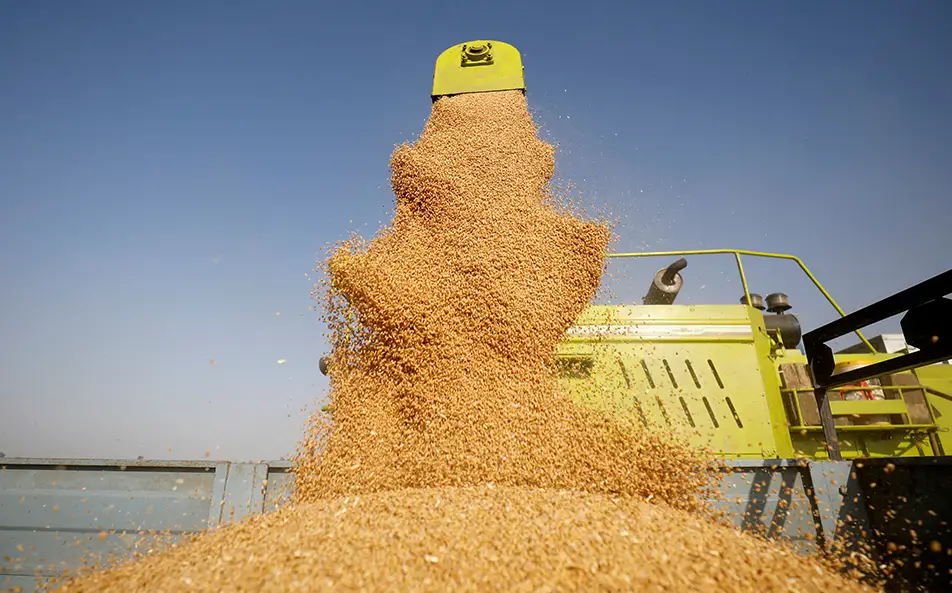
The full removal of restrictions did not happen overnight. On February 13, the government approved exports of 2.5 million tonnes of wheat along with another 500,000 tonnes of wheat products. The government said private wheat stocks were around 7.5 million tonnes and projected central-pool availability of roughly 18.2 million tonnes by April 1—comfortably above food-security requirements. Another 2.5 million tonnes of wheat exports were approved in April.
That took the total wheat quantity permitted during the reopening phase to 5 million tonnes. So traders had already returned to the overseas market months before the August announcement. Reuters reported in May that Indian exporters had begun loading wheat for customers including buyers in the UAE, marking the first commercial shipments in roughly four years. The important change now is that traders no longer need to operate inside a fixed national quota for the newly freed categories.
Wheat products went through a similar transition. On January 16, DGFT authorised exports of 500,000 tonnes of wheat flour and related products. But the official export status remained “Prohibited”. The quota operated as an exception requiring export authorisation. On February 24, another 500,000 tonnes were added, bringing the total permitted wheat-product volume to 1 million tonnes. Again, DGFT specifically said the underlying policy would continue to remain “Prohibited”. That distinction disappeared on August 24. Atta, maida and the other products covered by the new notification are now in the “Free” category.
The supply situation today looks very different from 2022. Hindustan Times reports that Food Corporation of India wheat stocks stood at 50.5 million tonnes on August 1, 2026.
That was almost 46% higher than a year earlier and the highest level in five years. Government procurement during the 2026-27 marketing season had also reached approximately 35.76 million tonnes, above the revised procurement target of 34.6 million tonnes.
The government had already cited stronger stocks, higher acreage and improved production prospects when it began relaxing export restrictions earlier in the year. That means the latest decision is not simply a response to international demand. India now has a much larger domestic supply cushion than it did when the ban was imposed.
Policy is no longer the main obstacle. Price is. Traders told Hindustan Times that Indian wheat at Kandla was trading at around ₹2,700 per 100 kg. They estimated it would need to be closer to ₹2,600 per 100 kg for many export transactions to become commercially viable after accounting for competing international prices and freight. Reuters had identified the same problem in May.
At the time, Indian supplies were at least roughly $20 per tonne more expensive in international markets than competing wheat from Australia or the Black Sea region. That explains why earlier quotas did not translate into anything close to 5 million tonnes of actual exports. Hindustan Times says shipments so far have included only about 60,000 tonnes of wheat products, plus relatively small quantities of wheat going to Bangladesh. So the end of the wheat export ban creates an opportunity, not guaranteed demand.
For an exporter, the calculation is relatively straightforward. If the domestic wheat price plus transport, handling and port costs makes Indian grain more expensive than Russian, Australian, Argentine or other alternatives, overseas buyers have little reason to switch. That can change quickly. Global wheat markets have recently faced renewed disruption from attacks on Russian and Ukrainian grain infrastructure. Reuters reported on August 20 that Chicago wheat futures had risen more than 17% since early July as buyers worried about Black Sea supplies. If international prices climb while the Indian wheat price remains stable, India's export competitiveness improves. If Indian prices rise at the same time, exporters could continue struggling despite the new free-trade status.
Potentially, but the effect should not be overstated. Allowing more buyers into the market can create additional demand for Indian wheat and give farmers another outlet beyond domestic millers, traders and government procurement. The government itself said earlier export relaxations were intended to improve market liquidity, prevent distress sales and support remunerative returns for farmers. But those benefits depend on actual exports taking place. If overseas buyers consider Indian wheat too expensive, the change in policy may have relatively little immediate effect on mandi prices. So it is more accurate to say free exports could support farmer prices if foreign demand materialises, rather than promising higher prices automatically.
The policy cycle has now come almost full circle. India banned wheat exports in May 2022 as heat damage, rising domestic prices and global disruption raised food security concerns.
It gradually reopened trade in early 2026 as stocks and production improved. First came quotas. Then commercial shipments resumed. Now the quantitative restrictions have been removed entirely for wheat and the specified flour products.
The legal barrier is therefore gone. The next question is commercial rather than regulatory: whether the international market is prepared to pay the price for Indian wheat. If the gap between domestic and global prices narrows, India's return could add meaningful supply to world markets and give farmers another source of demand. If it does not, the end of the ban may initially produce more headlines than cargoes.
Follow The United Indian for more latest news, updates and trending stories from India and around the world.
Everything you need to know
India lifted its wheat export ban on August 24, 2026, when the Directorate General of Foreign Trade issued Notification No. 35/2026-27, reclassifying wheat and wheat flour products from prohibited to free export categories, ending a restriction first imposed in May 2022.
According to Hindustan Times, traders say Indian wheat is currently priced higher than wheat from competing countries, making it less competitive overseas. Exporters expect shipments to rise meaningfully only if domestic prices fall or global prices rise enough to close that gap.
India eased the ban in stages: a February 13, 2026 approval allowed 2.5 million tonnes of wheat and 0.5 million tonnes of wheat products to be exported, followed by quota-based flour export approvals in January and February 2026, before the full shift to free exports on August 24, 2026.





Oct 09, 2026
TUI Staff
Oct 09, 2026
TUI Staff
Oct 09, 2026
TUI Staff
Oct 09, 2026
TUI Staff
Oct 09, 2026
TUI Staff
Oct 09, 2026
TUI Staff
Oct 09, 2026
TUI Staff
Oct 09, 2026
TUI Staff

Stay informed with independent, fact-checked journalism on technology, environment, government, economy and more. India’s most trusted digital news platform.







Comments (0)
Be the first to comment!