
Indian Air Force Gets New Chief: 5 Major Challenges Ashutosh Dixit Will Inherit
From delayed Tejas deliveries to AMCA and Rafale procurement, Ashutosh Dixit inherits an urgent fighter-fleet modernisation challenge.
 IN
Thu, Oct 08, 2026 | 05:02 PM IST
IN
Thu, Oct 08, 2026 | 05:02 PM IST


The Indian Air Force is preparing for a leadership transition at a crucial stage of its modernisation drive, with Air Marshal Ashutosh Dixit set to take over as the 29th air chief on October 31. Dixit will succeed Air Chief Marshal Amar Preet Singh at a time when fighter strength remains well below the sanctioned level and several major aircraft programmes are either delayed or still moving through development and procurement. The immediate list includes the LCA Mk-1A, the more capable LCA Mk-2, the Multi-Role Fighter Aircraft programme, India's AMCA fifth-generation fighter and a new medium transport aircraft project.
The challenge is not simply choosing new aircraft. India needs to accelerate domestic production while preventing further delays from widening operational gaps over the next decade.
Air Marshal Ashutosh Dixit is currently Vice Chief of the Air Staff and will formally become Chief of Air Staff on the afternoon of October 31. The government announced his appointment on October 6. He was commissioned into the fighter stream in December 1986 and has logged more than 3,500 flying hours. His experience includes Mirage-2000, MiG variants, Jaguar, Tejas, Hawk, IL-78 and several transport and training aircraft. He is also an experimental test pilot and qualified flying instructor. That background is particularly relevant because many of the programmes requiring attention involve aircraft development, testing and induction.
The Indian Air Force currently operates roughly 30 fighter squadrons compared with an authorised strength of 42.5. Outgoing air chief AP Singh said on October 4 that India needs to induct around 36 to 40 combat aircraft every year—or roughly two squadrons annually—to rebuild strength. That requirement explains why the speed of aircraft production may matter almost as much as the performance of individual fighters.
The programme closest to induction is the LCA Mk-1A, an upgraded version of the indigenous Tejas. The IAF has ordered 180 Mk-1A fighters through two contracts. The first, signed in 2021, covers 83 aircraft; another 97 were ordered in September 2025. Their combined value is around ₹1.1 lakh crore. However, the first aircraft was originally due in March 2024.
That deadline slipped because of delays in GE Aerospace supplying F404-IN20 engines, along with pending certification, radar corrections and weapons-integration work. Engine supplies have since improved, while HAL says it is working through the remaining technical issues.
The light combat aircraft is now expected to begin entering service by the end of 2026. HAL plans to deliver around 10 fighters during FY2026-27 and says its Bengaluru and Nashik production facilities can together build up to 24 Mk-1As annually. For Dixit, keeping that timetable from slipping again will be one of the earliest measurable tests after he takes charge.
The Mk-1A solves part of the short-term problem. The LCA Mk-2 is intended to address a different requirement. It is a larger and more capable light combat aircraft designed eventually to replace ageing Mirage-2000, MiG-29 and Jaguar fleets. HAL has completed structural coupling of the first aircraft, joining the front, centre and rear fuselage sections. A first ground run is targeted for March 2027, followed by a maiden flight later that year.
The Mk-2 is expected to offer:
It will use the GE F414-INS6 engine, with HAL and GE Aerospace negotiating local joint production. The proposed arrangement involves substantial technology transfer, though the commercial agreement still has to be completed.
The IAF is expected to move the procurement case forward as development progresses.
The second light combat aircraft programme therefore matters because delays here would create another gap later, just as Mirage-2000s, MiG-29s and Jaguars move closer to retirement.
The largest near-term foreign fighter acquisition is the Multi-Role Fighter Aircraft programme. The Defence Acquisition Council formally granted Acceptance of Necessity in February 2026 for procurement of MRFA fighters identified as Rafale, along with combat missiles and high-altitude pseudo-satellite systems. The government said a majority of the MRFA aircraft would be manufactured in India. Hindustan Times reports that the model under discussion involves 114 Rafales, with 18 supplied directly from France and the remainder manufactured in India by Dassault Aviation with a local partner. The estimated value has been reported at around ₹3.25 lakh crore.
However, this distinction is important: the AoN is official, but the final contract has not yet been signed. Negotiations still have to settle localisation, Indian weapons integration, India-specific modifications, pricing and production terms. Outgoing air chief AP Singh said the service is counting on MRFA, the Mk-1A and additional Su-30MKIs to prevent fighter strength from declining further. India already operates 36 Rafales acquired under the earlier agreement with France.
The most technologically ambitious programme Dixit will inherit is the Advanced Medium Combat Aircraft. AMCA is India's planned fifth-generation combat jet and is intended to provide capabilities associated with stealth fighters, including reduced radar signature, internally carried weapons, advanced sensors and high-end mission systems. The Ministry of Defence has already approved an industry-partnership model allowing public and private Indian companies to compete for prototype development. In May 2026, the government also laid the foundation stone for an Aircraft Integration and Flight Testing Centre at Puttaparthi to accelerate AMCA development. The broader programme has an outlay of around ₹15,000 crore.
According to the latest reported timeline, three groups have been shortlisted for prototype development:
The programme envisages five prototypes, with the first flight currently expected around 2029 and development targeted for completion around 2034. Production could follow from 2035 if the timeline holds.
India's fifth-generation requirement is becoming increasingly important because regional air forces are moving faster in this category. China already operates the J-20 and is advancing the J-35 programme. That creates pressure on India to ensure AMCA does not suffer the type of multi-year delays seen in some earlier aerospace projects. The proposed 25-tonne aircraft is expected to feature internally stored smart weapons, advanced avionics, 360-degree situational awareness and supercruise capability. At the same time, foreign stealth fighters remain part of the broader debate.
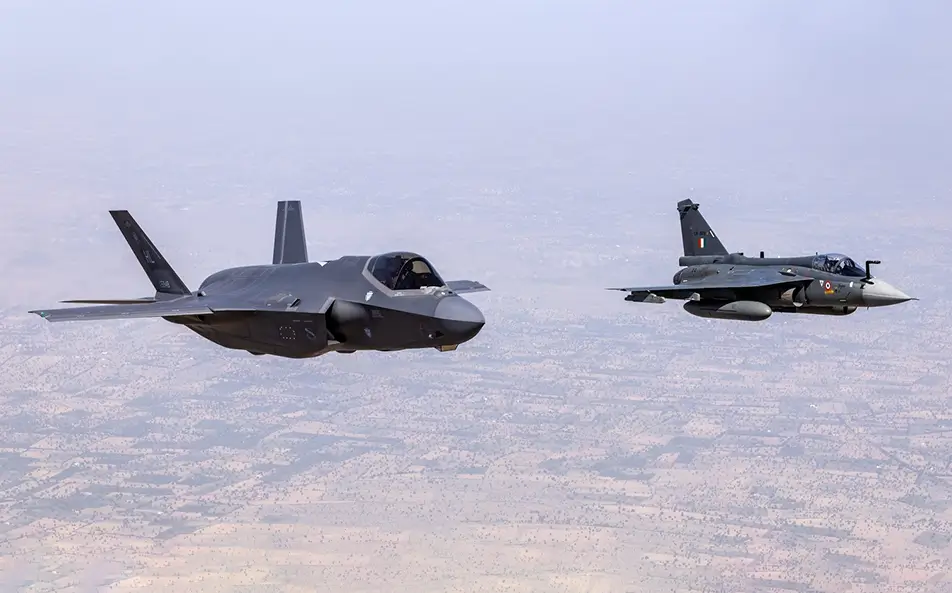
Russia has promoted the Su-57 to India, while the United States has previously signalled possible access to the F-35. But no Indian decision has been announced. Hindustan Times reports that AP Singh said Russia had been pushing the Su-57, while the IAF had not received a formal F-35 proposal. For now, AMCA remains the central indigenous route to a fifth-generation fleet.
Fighter jets will dominate attention, but the incoming Chief of Air Staff will also inherit a major transport-aircraft competition.The Ministry of Defence issued a tender in August for up to 60 medium transport aircraft, with an estimated programme value of around ₹1 lakh crore. The requirement covers aircraft capable of carrying approximately 18 to 30 tonnes.
Five Indian companies have reportedly been invited:
Tata has partnered with Lockheed Martin around the C-130J Super Hercules, while Mahindra has partnered with Brazil's Embraer, which is offering the C-390 Millennium. The winning bidder is expected to establish production in India, linking the procurement to the government's broader domestic manufacturing strategy.
A recurring theme across all these projects is time. India can approve advanced fighters, negotiate technology transfer and build new production lines, but the operational benefit only arrives when aircraft enter squadrons at a sufficiently high rate. Outgoing chief AP Singh's call for 36 to 40 aircraft a year illustrates the size of that problem. HAL's current stated Mk-1A capacity of 24 aircraft annually would not by itself meet that total requirement.
The pressure will increase as older fighters retire. That is why delays in Mk-1A deliveries have attracted scrutiny even though the aircraft itself represents a substantial capability upgrade.
Defence Minister Rajnath Singh has also publicly warned that delays in military programmes create capability gaps, raise costs and risk equipment becoming technologically outdated before induction.
Air Marshal Ashutosh Dixit enters the job with direct experience relevant to several of these programmes. Apart from serving as Vice Chief, he has headed Central Air Command and served as Chief of Integrated Defence Staff to the Chairman, Chiefs of Staff Committee. His flying record includes Tejas and multiple frontline fighter types.
His operational record also includes participation in Operation Safed Sagar, Operation Rakshak, Cope India and Operation Sindoor. That does not mean the air chief controls aircraft development or procurement alone. HAL, DRDO, the Aeronautical Development Agency, the defence ministry, foreign suppliers and private manufacturers all play different roles. But the service chief helps define operational requirements, prioritise capability gaps and maintain pressure on programmes that directly affect combat readiness.
One final distinction is important. Dixit has been appointed, but AP Singh remains the serving air chief until October 31.
The new Chief of Air Staff will formally take charge only after Singh retires that day.
The Indian Air Force will therefore enter its next leadership phase with several major decisions already moving but few fully resolved: the Mk-1A must finally enter service, the Mk-2 must reach flight testing, the Rafale MRFA deal has to move from approval towards contract, and AMCA must stay on schedule if India wants an indigenous fifth-generation capability in the next decade. For Dixit, the central challenge will be linking all of those programmes to one immediate operational requirement: rebuilding fighter strength quickly enough to prevent today's squadron shortage from becoming a deeper capability gap.
Everything you need to know
Air Marshal Ashutosh Dixit, currently Vice Chief of the Air Staff, has been appointed the 29th Chief of the Air Staff. He will assume the rank of Air Chief Marshal when he takes charge on October 31.
He will formally take over on the afternoon of October 31, 2026, when serving Air Chief Marshal Amar Preet Singh retires. Until then, AP Singh remains the serving Chief of Air Staff.
Recent reporting puts the IAF at 29 fighter squadrons, against an authorised strength of about 42. Air Chief Marshal AP Singh has said the force needs roughly 36-40 new combat aircraft every year to rebuild strength.
The major programmes include LCA Mk-1A, LCA Mk-2, the MRFA procurement and AMCA, alongside additional Su-30MKI requirements and other capability upgrades. Your draft correctly identifies these as interconnected parts of the fleet-modernisation problem.
No. The Defence Acquisition Council has officially granted Acceptance of Necessity for MRFA identified as Rafale, with most aircraft intended to be manufactured in India. However, a final procurement contract has not yet been signed. The frequently reported figure of 114 aircraft comes from the procurement model under discussion, not from a completed contract.


Oct 08, 2026
TUI Staff
Oct 08, 2026
TUI Staff
Oct 08, 2026
TUI Staff
Oct 07, 2026
TUI Staff
Oct 08, 2026
TUI Staff
Oct 08, 2026
TUI Staff
Oct 08, 2026
TUI Staff
Oct 07, 2026
TUI Staff

Stay informed with independent, fact-checked journalism on technology, environment, government, economy and more. India’s most trusted digital news platform.


Comments (0)
Be the first to comment!