
One Horned Rhinoceroses Hit Record 4,075: How Assam Changed Their Fate
How Assam helped bring one horned rhinoceroses back
 IN
Mon, Sep 14, 2026 | 04:33 PM IST
IN
Mon, Sep 14, 2026 | 04:33 PM IST


A century ago, fewer than 100 greater One Horned Rhinoceroses were left. Today, there are 4,075. So what changed?
The answer leads straight to Assam.
India now has an estimated 3,323 Greater One Horned Rhinoceroses, while Nepal has around 752, taking the global population to 4,075. Assam Forest Minister Jayanta Mallabaruah says his state alone is home to nearly 80% of the world's population.
That number makes for a striking headline. But the real story is what happened behind it.
Assam went from losing dozens of rhinos to poachers in some of its darkest years to recording years in which not a single successful poaching case was reported. Better intelligence, tougher enforcement, technology, local communities and long-term habitat management all played a part.
The International Rhino Foundation's 2026 State of the Rhino report estimates the global greater One Horned Rhinoceroses population at 4,075, up from 4,014 in 2022. The species had fallen below 100 animals in the early 20th century.
That makes its recovery one of the more remarkable examples of modern wildlife conservation.
The species, scientifically called Rhinoceros unicornis, remains classified as Vulnerable, meaning the rise in numbers should not be mistaken for the end of the conservation challenge.
Most of these animals are found in India, with Nepal holding the other major wild population.
At the centre of the story is Kaziranga National Park, which counted 2,613 One Horned Rhinoceroses in 2022.
But Assam's rhinos are not limited to Kaziranga. Populations are also found in Orang National Park, Pobitora Wildlife Sanctuary and Manas National Park.
An Assam government indicator framework lists 2,895 rhinos across the state in the 2022 census.
This also creates an important distinction around Mallabaruah's “nearly 80%” statement.
India's 3,323 rhinos represent roughly 81.5% of the current global estimate. Assam's last publicly cited statewide count of 2,895 would represent a smaller share, although that census is several years older than the latest global estimate.
So the 80% figure is best presented as the minister's claim until a newer statewide count provides a directly comparable number.
What is beyond dispute is that Assam remains the most important landscape on Earth for this species.
The recovery becomes much more striking when you look at where Assam was just over a decade ago.
According to figures reported by Hindustan Times, 191 rhinos were poached in Assam between 2000 and 2021.
The situation was particularly serious in 2013 and 2014, when 27 rhinos were killed in each year. The number later fell sharply - six in 2017, seven in 2018, three in 2019 and two each in 2020 and 2021.
Why were they being killed?
The horn is trafficked through illegal markets because of false beliefs about its supposed medicinal properties and because it can command high prices.
Stopping rhino poaching, therefore, required much more than simply putting extra guards near the animals.
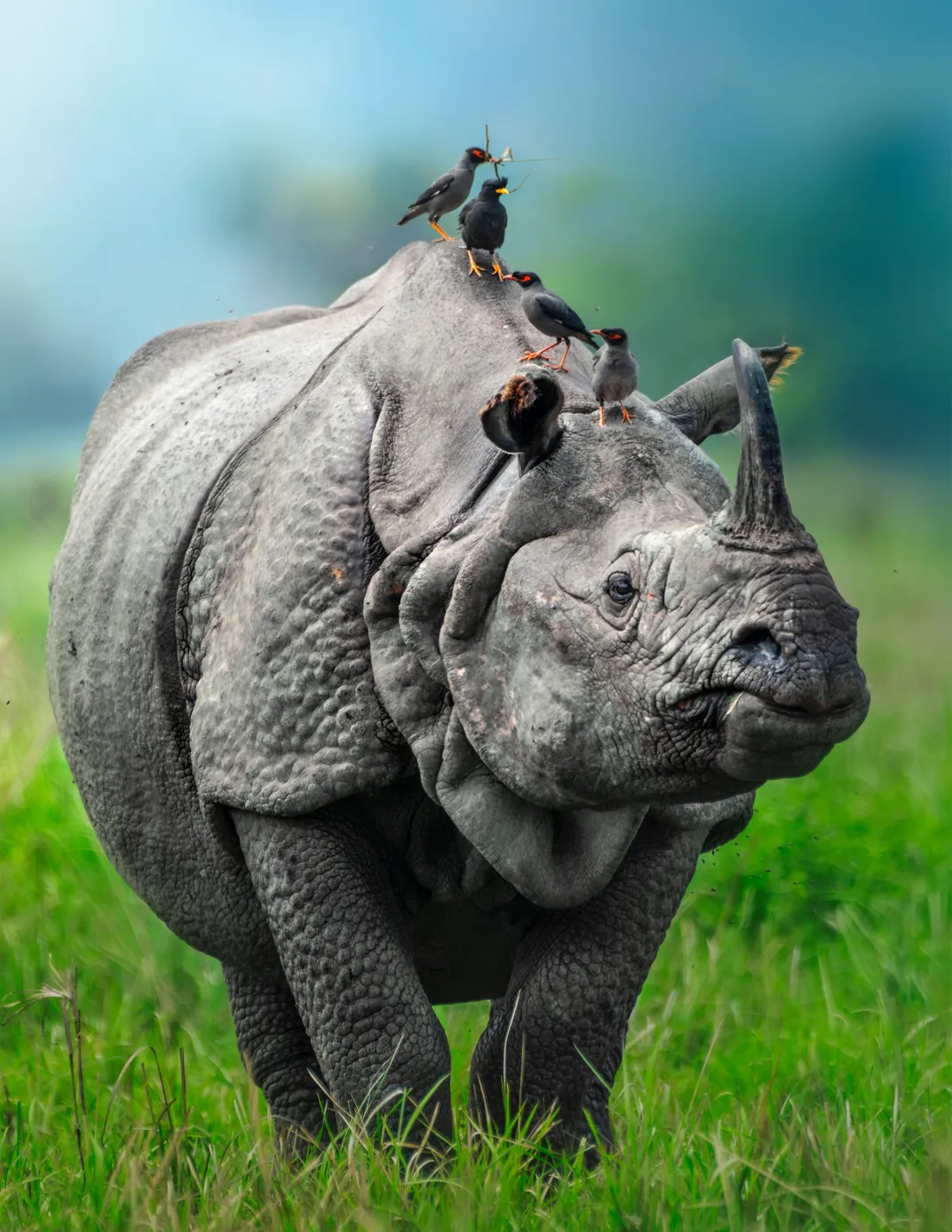
Img Src : Smithsonian
A major turning point came in June 2021, when Assam created a special anti-poaching task force involving senior forest and police officials.
Instead of working separately, the two departments began sharing intelligence about suspected poachers, previous crimes, entry routes into protected areas and known wildlife offenders.
Authorities also expanded the use of:
Communities around protected areas were brought into the effort as well. Boatmen and villagers were encouraged to report suspicious activity, giving authorities information that cameras alone could not provide.
During severe floods, when rhinos moved towards higher ground and became more exposed, teams also tracked vulnerable animals more closely.
The result was dramatic.
In 2022, Assam recorded no rhino poaching for the first time since 1977, according to state officials.
The state again reported zero known poaching cases in 2025, a milestone Mallabaruah highlighted while announcing the latest global population figures.
Zero recorded killings does not mean poachers have disappeared. It means authorities have become far better at preventing attempts from ending in dead rhinos.
One of Assam's most dramatic anti-poaching messages came on September 22, 2021.
The state government publicly burned 2,479 stockpiled rhino horns at Bokakhat.
According to the Assam government's official release, the horns came largely from animals that had died naturally or accidentally, along with confiscated material. Officials said the destruction was intended to challenge the myth that rhino horn has medicinal value and send a strong message against illegal trade.
Another 94 horns were retained for museum purposes and 29 for ongoing court cases.
It was symbolic, but symbols matter when illegal demand is partly driven by belief.
Ironically, success has created a new challenge.
Keeping a growing population healthy requires enough grassland, water and secure territory.
At Manas, invasive plants have taken over roughly one-third of rhino grassland habitat, according to the International Rhino Foundation. Conservation teams are working with communities to clear invasive vegetation and restore native habitat.
There is also a risk in having so many animals concentrated in a handful of locations.
That is why programmes such as Indian Rhino Vision have moved rhinos from crowded populations into suitable habitats such as Manas.
In 2021, the final translocation under Indian Rhino Vision 2020 moved two animals from Pobitora to Manas, where an initial reintroduced population had been established years earlier.
The next phase of wildlife conservation is therefore not just about keeping guns away from rhinos. It is about creating several healthy populations that can survive disease, floods, climate pressures and habitat loss.
The headline number is 4,075.
But Assam's bigger achievement is the journey behind it.
A state that once lost 27 rhinos in a single year built a system in which forest guards, police officers, technology and communities increasingly work together to protect them.
And Kaziranga National Park is no longer the only focus. Expanding secure populations into Manas and other suitable habitats could become just as important as protecting the animals already alive.
The greater One Horned Rhinoceroses has moved from the edge of disappearance to more than 4,000 animals worldwide.
That is a success worth celebrating.
But the more important question now is whether Assam can turn a remarkable comeback into something even harder to achieve: a recovery that lasts.
Everything you need to know
The latest global estimate puts the population of greater one horned rhinoceroses at 4,075, with most living in India and Nepal.
India is home to around 3,323 greater one horned rhinoceroses, accounting for more than 80% of the current global population.
Assam Forest Minister Jayanta Mallabaruah has said the state holds nearly 80% of the global population. However, Assam’s last widely cited statewide count recorded 2,895 rhinos in 2022, so the exact current percentage needs a newer comparable census.
Kaziranga is the species’ largest stronghold. The 2022 census recorded 2,613 rhinos there, making the park crucial to the survival and recovery of greater one horned rhinoceroses.
Assam strengthened forest-police coordination, intelligence gathering, patrols, CCTV and drone surveillance while involving local communities. The state recorded zero known rhino-poaching cases in 2022 and again in 2025.






Sep 13, 2026
TUI Staff
Sep 11, 2026
TUI Staff
Sep 10, 2026
TUI Staff
Sep 09, 2026
TUI Staff
Sep 14, 2026
TUI Staff
Sep 14, 2026
TUI Staff
Sep 11, 2026
TUI Staff
Sep 11, 2026
TUI Staff

Stay informed with independent, fact-checked journalism on technology, environment, government, economy and more. India’s most trusted digital news platform.






Comments (0)
Be the first to comment!