
Nepal Gen Z protests: How a youth-driven digital uprising reshaped politics
Youth Voices Rise
 IN
Tue, Oct 20, 2026 | 04:22 AM IST
IN
Tue, Oct 20, 2026 | 04:22 AM IST

For years, young people in Nepal had been expressing their frustrations quietly. Conversations about politics, unemployment, and governance often unfolded online rather than on the streets. Many young Nepalis felt disconnected from traditional political institutions and unsure about their future.
But in 2025 something shifted. What had once been scattered complaints on social media gradually turned into a larger conversation that people across the country could no longer ignore. Videos, posts, and online discussions about political accountability began circulating widely, especially among younger citizens who had grown up with smartphones and constant internet access.
Those conversations soon grew into something much bigger. The discussions spreading across social platforms eventually sparked demonstrations that came to be known as the Nepal Gen Z protests.
As online criticism intensified, young people started gathering in public spaces to express their concerns directly. Demonstrations first appeared in Kathmandu before spreading to other cities such as Pokhara and Biratnagar.
Students, young professionals, and first-time voters formed the core of the movement. Many participants said they wanted greater transparency in governance and better economic opportunities for young citizens. Unlike earlier political movements in Nepal, this one did not revolve around a single leader or party. Instead, protest organisers relied heavily on digital networks to coordinate events. Messages about gathering points and protest schedules circulated rapidly through social media platforms and messaging groups.
Within days, crowds had grown significantly. Protesters carried handwritten posters, raised slogans demanding accountability, and broadcast events live through their phones. The movement felt spontaneous yet organised, powered largely by a generation comfortable navigating Digital spaces.
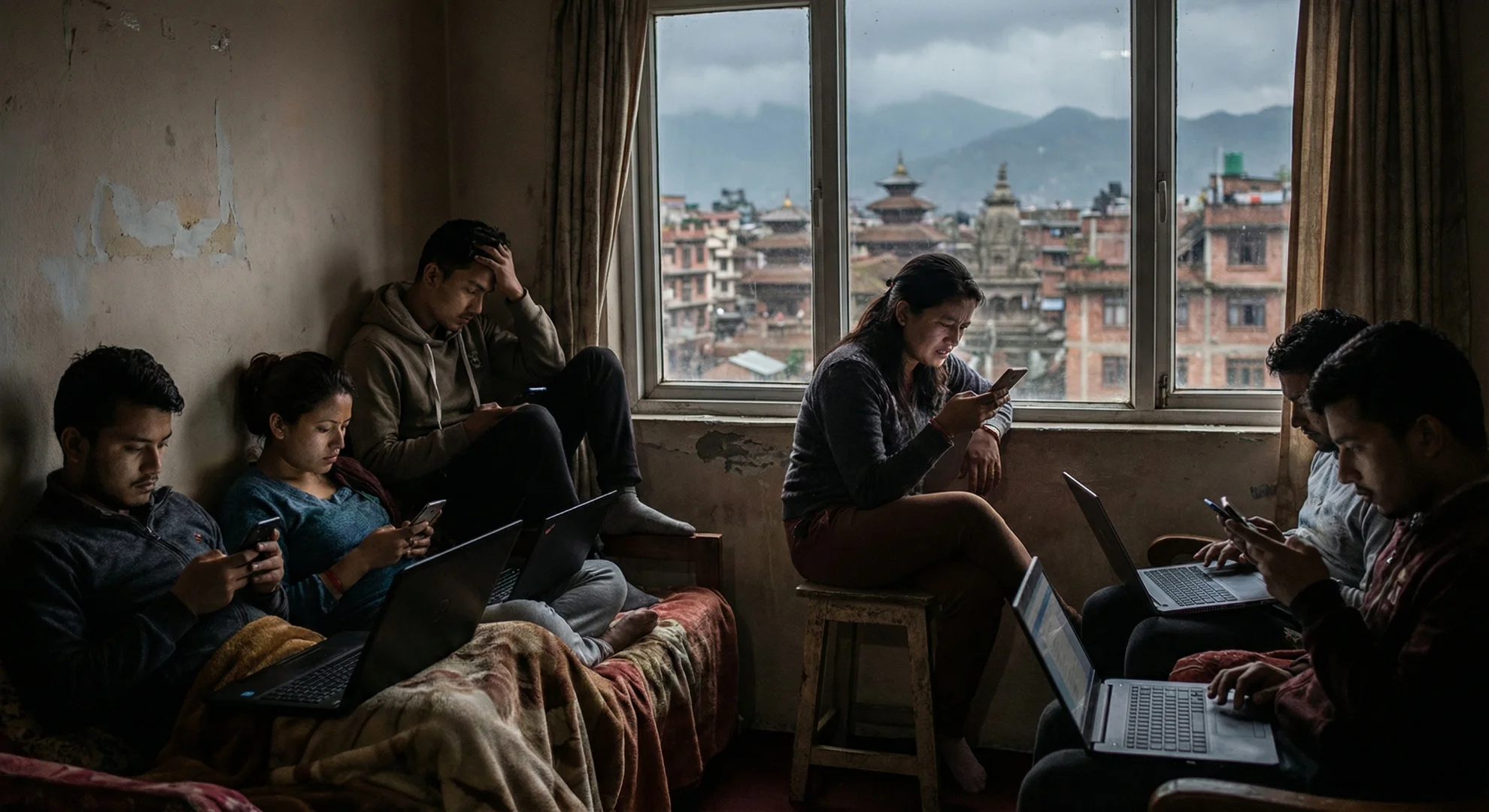
As the demonstrations expanded, authorities attempted to control the flow of online information. Government officials argued that misinformation spreading online could inflame tensions and threaten stability.
This led to restrictions on certain digital platforms, sparking a debate about why Nepal banned social media during the political crisis. For many young citizens, the restrictions were interpreted as an attempt to silence criticism rather than manage misinformation. Instead of weakening the protests, the decision appeared to energise them.
Online discussions about digital rights and freedom of expression quickly gained momentum. The restrictions became part of the larger narrative of the movement, strengthening the resolve of many protesters who believed their voices were being ignored.
The Nepal Gen Z protests highlighted an important shift in the country’s political landscape. Nepal’s younger generation has grown up in a world where information spreads quickly and communication happens instantly.
Unlike previous generations, these young citizens are used to discussing public issues openly online. They can organise gatherings, share updates, and mobilise supporters within hours. Political analysts say this ability to coordinate digitally has fundamentally changed the nature of civic engagement. Traditional political structures are no longer the only channels through which citizens express their demands.
For many young Nepalis, participating in the protests represented a chance to influence the direction of their country’s future.
The developments in Nepal attracted attention across South Asia. Observers noted that youth-led movements driven by social media could become more common as internet access expands across the region. The protests demonstrated how quickly online conversations can transform into real-world political action. What once required months of planning can now happen within days when people connect through digital platforms.
For the young citizens who participated, the protests represented more than a moment of political frustration. They symbolised a generation stepping forward to demand a greater role in shaping the country’s future. The movement showed that digital platforms can amplify voices that might otherwise remain unheard. A conversation that began online eventually evolved into demonstrations capable of influencing national politics.
For many observers, the story of the protests reflects a broader transformation taking place across modern democracies. Technology has not only changed how people communicate but also how they organise, protest, and participate in political life.
Everything you need to know
The protests were driven by growing frustration among young Nepalis over governance issues, economic challenges, and political accountability.
Social media allowed protesters to organise demonstrations, share information quickly, and broadcast events to a nationwide audience.
Authorities said the restrictions were intended to prevent misinformation and maintain stability during the demonstrations.
The protests sparked national debate about governance and highlighted the growing influence of young voters.
The youth movement may affect voting behaviour as younger citizens demand reforms and greater accountability from political leaders.



Oct 19, 2026
TUI Staff
Oct 19, 2026
TUI Staff
Oct 17, 2026
TUI Staff
Oct 17, 2026
TUI Staff
Oct 19, 2026
TUI Staff
Oct 19, 2026
TUI Staff
Oct 17, 2026
TUI Staff
Oct 17, 2026
TUI Staff

Stay informed with independent, fact-checked journalism on technology, environment, government, economy and more. India’s most trusted digital news platform.








Comments (0)
Be the first to comment!