
National Sports Day 2026: 1,500+ Locations, Top Athletes and PM Modi - What’s Happening on August 27?
Where India’s sporting dreams meet its next generation
 IN
Fri, Oct 09, 2026 | 10:44 PM IST
IN
Fri, Oct 09, 2026 | 10:44 PM IST


For India, sport is never just sport.
It is the cricket match that brings an entire neighbourhood together. It is a hockey stick on a school ground, a kabaddi game on a dusty field, or an athlete's victory that makes millions feel proud.
That emotion will take centre stage this August.
Although National Sports Day 2026 falls on August 29, one of the biggest youth-focused programmes will begin two days earlier. On August 27, Prime Minister Narendra Modi will address young people and budding athletes through the nationwide “Khelo India Dialogue – Khel Ki Baat, Pradhan Mantri Modi Ke Saath.”
The programme will bring together youth, athletes, educational institutions and policymakers at more than 1,500 locations across India.
But what exactly will happen on August 27? And why does this programme matter for India's sporting future?
The Khelo India Dialogue is being held two days before the national sports day of India, observed every year on August 29.
According to the Press Information Bureau, PM Modi will deliver a virtual address to young participants across 1,500+ locations. Physical programmes will follow at participating institutions.
Participating institutions include IITs, IIMs, NITs, AIIMS, premier medical colleges, universities and other leading educational institutions.
The programme is not designed as a one-way speech. Young participants will share their ideas, experiences and suggestions about India's sports and youth ecosystem.
| Detail | Information |
| Programme | Khelo India Dialogue |
| Date | August 27, 2026 |
| Locations | 1,500+ |
| Main speaker | Prime Minister Narendra Modi |
| Participants | Youth, athletes, institutions and policymakers |
| Olympic focus | 2036 Olympics |
| National Sports Day | August 29, 2026 |
The dialogue will focus on four areas.
The first focus is on better grassroots facilities, coaching and opportunities.
For an aspiring athlete, talent is only the starting point. A proper ground, trained coach, equipment and regular competitions can decide whether that talent gets a real chance.
The second theme looks towards India's long-term Olympic ambitions.
The programme will discuss scientific talent identification and athlete development. 8
The lesson is simple: Olympic success cannot be built overnight. It starts years earlier, when promising athletes are identified and supported.
The third theme moves beyond sport.
Young people will discuss ways to strengthen youth leadership and participation in governance. It gives them an opportunity to move from being observers to becoming contributors.
The fourth theme connects sports with the broader Viksit Bharat vision.
It includes future-ready skills, volunteering and opportunities for young people to contribute to nation-building.
Together, these themes show that the programme is about youth development as much as sporting development.
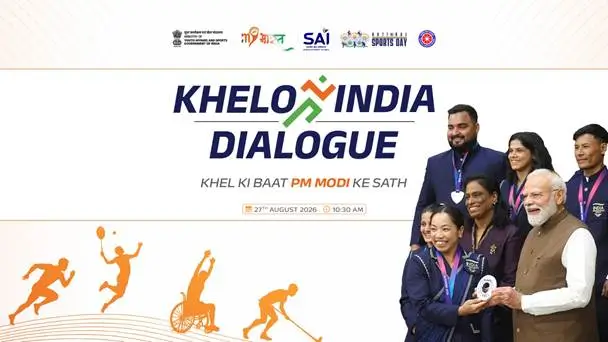
Img Src : PIB
The athlete line-up is another major attraction.
The programme will feature sporting names including Deepa Karmakar, Saina Nehwal, Gagan Narang, Sreejesh, Mary Kom, Baichung Bhutia, Pullela Gopichand, Anju Bobby George, Karnam Malleswari, Mirabai Chanu and Manika Batra, along with prominent cricketers.
They are expected to speak about their journeys, challenges, failures and successes.
That personal connection matters.
Behind every medal are years of training, setbacks and second chances. For a young athlete, hearing that story directly from a champion can make the dream feel less distant.
Sports Minister Mansukh Mandaviya captured that idea during his briefing:
“A champion’s journey does not begin in a grand stadium, but with a small field and a first attempt.”
Athletes will not be the only prominent participants.
Members of Parliament, MLAs, Union Ministers, Ministers of State and State Sports Ministers will also interact with young people and seek their views on the four themes.
That creates a useful bridge between the playing field and policymaking.
A young athlete can talk about facilities. A student can suggest ways to make sport more accessible. A volunteer can explain what works in their community.
The real test will be whether these conversations continue after August 27.
Why the 2036 Olympics Start With Today's Young Athletes
India's Olympic ambitions depend on the strength of its sporting pipeline.
The government's recent sports-policy framework also links sporting development with its longer-term ambitions, including the 2036 Olympic vision.
But Olympic champions do not appear overnight.
They start on school grounds, local courts and village fields. They start with a first race, a first match or a first attempt.
That is why grassroots facilities, coaching and scientific talent identification matter.
The road to an Olympic podium can begin somewhere that looks nothing like an Olympic training centre.
August 29 carries a special place in India's sporting calendar because it marks the birth anniversary of Major Dhyan Chand, one of the country's greatest hockey players.
Dhyan Chand helped India win three consecutive Olympic gold medals in 1928, 1932 and 1936. His birth anniversary is observed as National Sports Day in his honour.
The story of national sports day major dhyan chand is therefore about more than remembering a hockey legend. It is about passing a sporting legacy from one generation to the next.
That is also why the 2026 programme feels timely.
The country is remembering a sporting icon while giving today's young athletes a platform to discuss tomorrow.
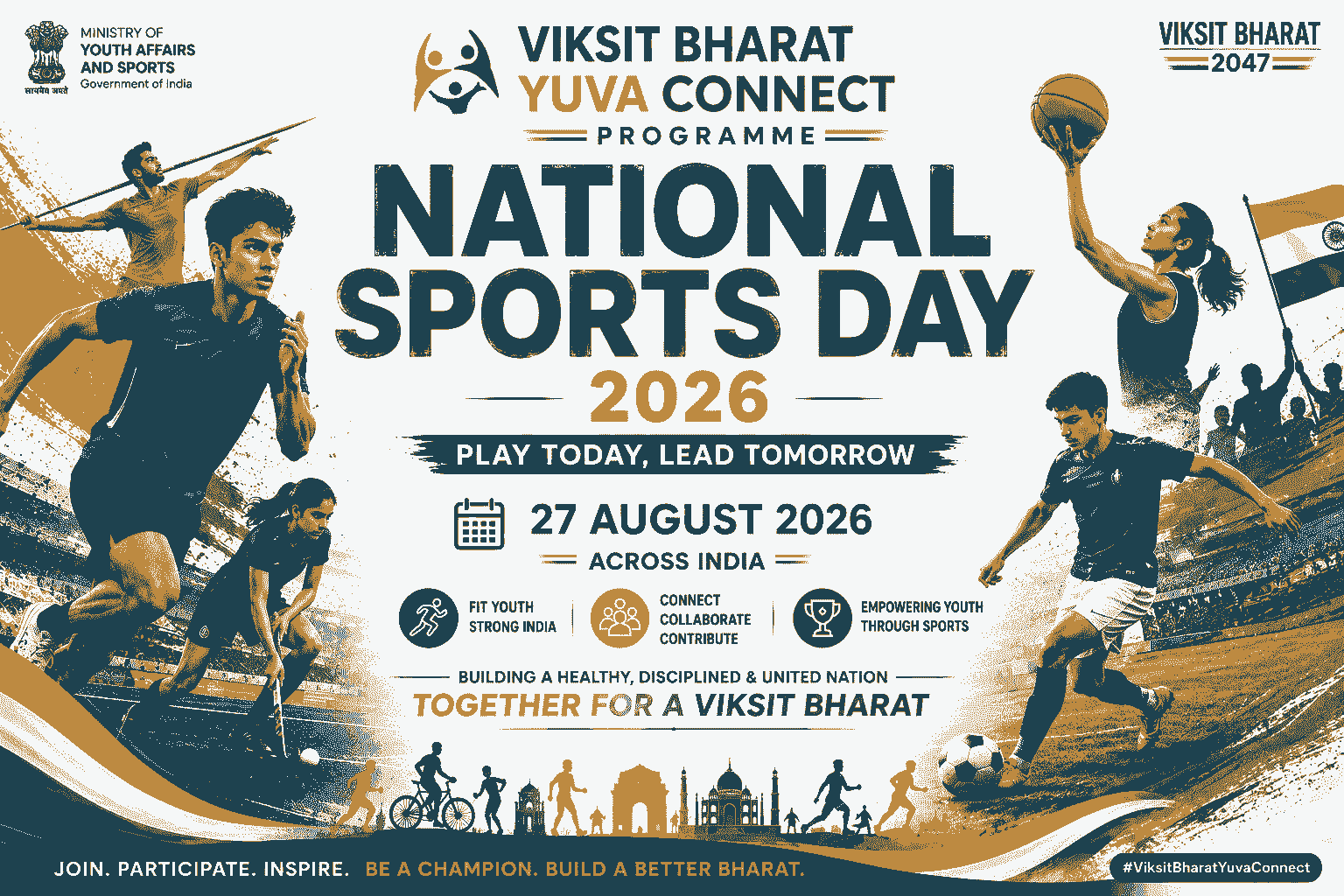
The government also wants the conversation to continue.
The Viksit Bharat Young Leaders Dialogue Quiz will form part of the initiative, and young participants will be encouraged to register on the MY Bharat Portal. The stated aim is to create sustained youth engagement beyond the one-day programme.
That will be an important measure of the programme's long-term value.
A big event can start a conversation. The real impact comes from what happens next.
For millions of Indians, sport has always been emotional.
We celebrate victories together. We remember heartbreaking defeats. We follow athletes whose struggles often remain invisible behind the medals.
But a sporting nation cannot be built only by watching champions.
It needs children who get a chance to play.
It needs grounds where they can practise.
It needs coaches who spot potential.
And it needs systems that support athletes when the first attempt does not work.
That is the real promise behind this year's celebrations.
The national sports day of india will honour Major Dhyan Chand on August 29. Two days earlier, young Indians will get a chance to speak about the future of sport itself.
And somewhere among those 1,500+ locations, there may be a young athlete taking their first serious step towards a dream.
The question is not whether India has talent. It is whether we give that talent enough chances to grow.
Everything you need to know
National Sports Day 2026 will be observed on August 29, the birth anniversary of hockey legend Major Dhyan Chand.
On August 27, the Khelo India Dialogue – Khel Ki Baat, Pradhan Mantri Modi Ke Saath will connect young people, athletes and policymakers across 1,500+ locations.
Prominent athletes including Saina Nehwal, Mary Kom, Mirabai Chanu, Deepa Karmakar, Gagan Narang, Sreejesh, Anju Bobby George, Karnam Malleswari, Pullela Gopichand and Manika Batra are expected to interact with young participants.
One of the four key themes focuses on scientific talent identification and athlete development to help build India's future sporting talent ahead of its long-term Olympic ambitions.
August 29 marks the birth anniversary of Major Dhyan Chand, the legendary Indian hockey player who helped India win three consecutive Olympic gold medals in 1928, 1932 and 1936.
Oct 09, 2026
TUI Staff
Oct 06, 2026
TUI Staff
Oct 06, 2026
TUI Staff
Oct 05, 2026
TUI Staff
Oct 09, 2026
TUI Staff
Oct 09, 2026
TUI Staff
Oct 09, 2026
TUI Staff
Oct 09, 2026
TUI Staff

Stay informed with independent, fact-checked journalism on technology, environment, government, economy and more. India’s most trusted digital news platform.
Comments (0)
Be the first to comment!