
Ministry of Corporate Affairs (MCA), Indian Government: What It Does, Key Laws, Functions & More
The Government Machinery Shaping India's Corporate World
 IN
Tue, Oct 06, 2026 | 06:24 PM IST
IN
Tue, Oct 06, 2026 | 06:24 PM IST


Imagine you have just decided to start a company in India. You have the business idea, chosen a name and perhaps even found your first customer. But before the business can truly enter the formal corporate world, there is a government system you need to navigate.
That system leads to the Ministry of Corporate Affairs (MCA).
And its role does not end once your company is registered.
From incorporation and annual filings to corporate governance, fraud investigations, insolvency and even the closure of a company, MCA's framework can follow a business through almost its entire journey. The ministry administers key corporate laws and oversees a wider ecosystem of regulators and institutions dealing with companies, LLPs, insolvency, competition, financial reporting and investor protection.
For entrepreneurs, directors, investors and anyone trying to understand how India's corporate system works, knowing what MCA does can make a complicated subject much easier to understand.
The Ministry of Corporate Affairs is a Union Government ministry responsible for administering India's corporate-law framework.
Its responsibilities include the regulation and administration of companies and LLPs, corporate compliance, governance, investigation, investor protection and related areas.
Think of it as one of the key pillars of India's formal business system. A company does not simply get incorporated and disappear from the government's radar. It has continuing legal and reporting responsibilities, and MCA provides much of the framework through which those responsibilities are managed.
The ministry of indian government also works through specialised institutions such as the Registrar of Companies, NCLT, NCLAT, IBBI, SFIO, NFRA and IEPFA. Each has a different role.
The easiest way to understand mca is to follow the journey of a company.
When an entrepreneur incorporates a company, MCA's digital systems and legal framework come into play.
Company incorporation, name-related processes, director information and statutory records are handled through the corporate registration framework.
But incorporation is only the beginning.
Companies have continuing compliance obligations. These can include annual returns, financial statements and other statutory filings.
The framework is designed to ensure that companies disclose prescribed information and remain accountable to their stakeholders.
The Companies Act, 2013 lays down rules relating to directors, boards, accounts, audits, shareholders and corporate governance.
For investors, these rules matter because good corporate governance can affect transparency and the way companies communicate important information.
What happens when a company is suspected of serious financial wrongdoing?
This is where institutions such as the Serious Fraud Investigation Office (SFIO) become relevant. SFIO is a specialised organisation that investigates serious cases of corporate fraud.
Not every business operates as a private limited company.
Limited Liability Partnerships come under the Limited Liability Partnership Act, 2008, which provides the legal framework for their formation and regulation.
A company's journey can end through different legal processes. MCA's framework also covers company strike-offs and other mechanisms connected with corporate exit.
So, from birth to closure, corporate regulation remains important.
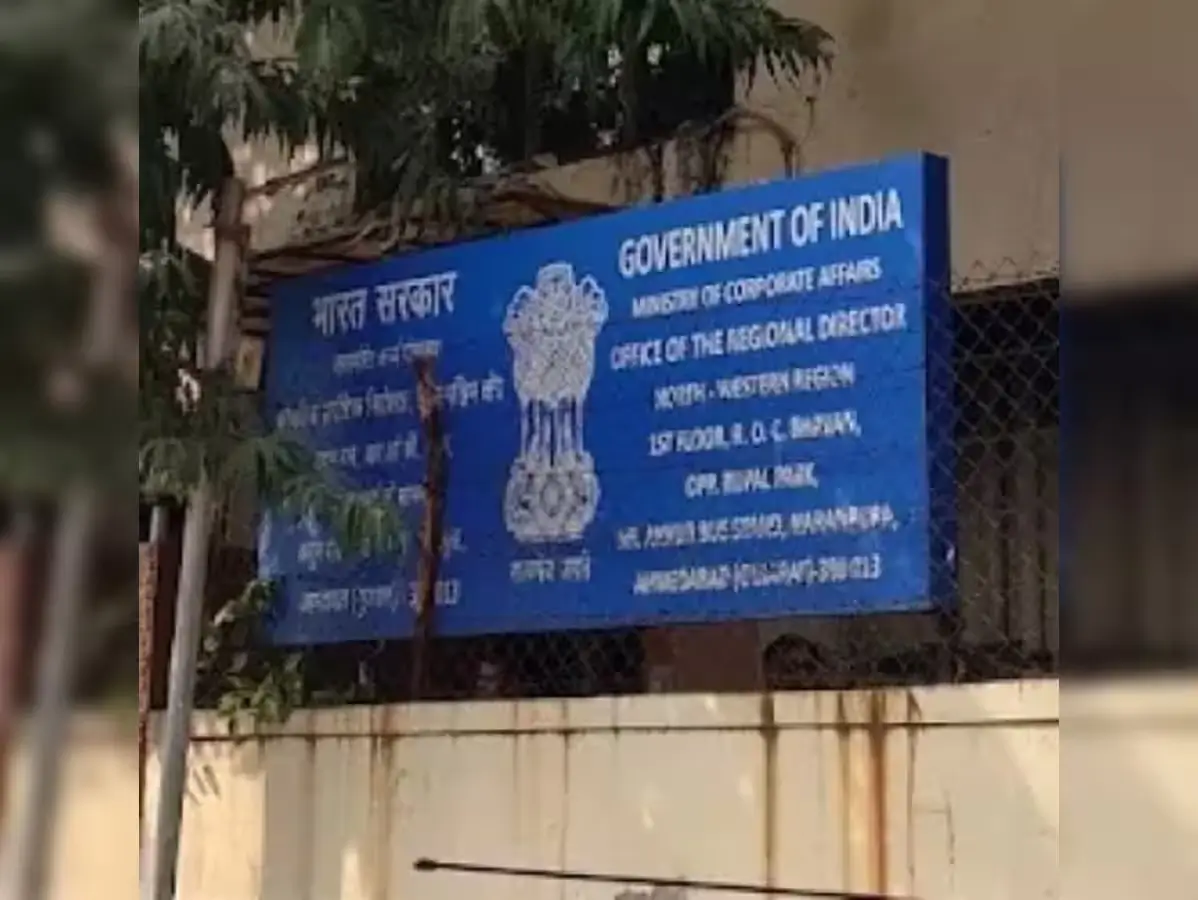
Img Src : The Economic Times
The corporate system is built around several important laws. India Code's official database lists legislation administered by the Ministry of Corporate Affairs, including the Companies Act, 2013, LLP Act, 2008, Competition Act, 2002, Insolvency and Bankruptcy Code, 2016 and laws governing professional bodies.
If there is one law you should associate with MCA, this is it.
The Companies Act, 2013 was enacted on 29 August 2013 and came into force from 1 April 2014. It replaced the older Companies Act, 1956.
The Act covers areas such as company formation, management, directors, accounts, audits, shareholders and corporate governance.
It also strengthened several aspects of corporate accountability and introduced provisions such as mandatory CSR requirements for companies meeting prescribed conditions.
The LLP Act created a separate legal framework for LLPs, giving businesses an option that combines partnership-style flexibility with limited liability.
Businesses do not always succeed. Some face mounting debt, cash-flow problems or insolvency.
The Insolvency and Bankruptcy Code (IBC), 2016 created a consolidated framework for insolvency resolution and liquidation. The NCLT and IBBI play important but distinct roles within this ecosystem.
The government has also highlighted the IBC's contribution to improving the insolvency-resolution framework and credit discipline.
Competition law deals with anti-competitive practices and protects fair competition in markets. The Competition Commission of India (CCI) is the principal competition regulator.
There was a time when corporate compliance meant paperwork, physical submissions and plenty of follow-ups.
Today, much of that journey happens online.
MCA21 is the ministry's digital service platform for corporate filings and related services. Its newer MCA21 V3 system has expanded digital filing and compliance capabilities.
The scale is significant. The Government of India reported that around 3.84 crore filings were made through MCA21 between 2021 and 2025. By February 2026, filings had moved to the V3 system.
The MCA portal now provides services covering companies, LLPs, director-related processes, statutory forms and several other corporate requirements.
Official portal: Ministry of Corporate Affairs
Not quite.
This is one distinction that often confuses new business owners.
MCA is the ministry. The Registrar of Companies (RoC) is part of the regulatory machinery that operates under the corporate-affairs framework.
RoCs perform functions such as maintaining company records, receiving statutory filings and handling specified compliance and registration matters.
The government expanded this structure in 2026. Three new Regional Directorates and six new RoCs were established as part of the ministry's efforts to strengthen regulatory administration and improve service delivery.
MCA's work connects with several specialised institutions. Knowing who does what makes the entire system easier to understand.
| Institution | What it does |
| Registrar of Companies (RoC) | Maintains company records and handles specified filings and registration functions |
| NCLT | Adjudicates specified company-law and insolvency matters |
| NCLAT | Hears appeals against specified NCLT decisions |
| IBBI | Regulates India's insolvency ecosystem |
| CCI | Regulates competition matters |
| NFRA | Oversees specified aspects of accounting and auditing |
| IEPFA | Works on investor education and protection |
| SFIO | Investigates serious corporate fraud |
These organisations are not interchangeable. Each has its own statutory responsibilities within India's wider corporate regulatory framework.
Behind the rules and digital systems are specialised professionals who administer corporate law.
The Indian Corporate Law Service (ICLS) is a Group A service associated with the Ministry of Corporate Affairs. Its officers perform corporate-law administration and regulatory functions.
The Indian Institute of Corporate Affairs (IICA) supports training, research, capacity building and professional development in corporate affairs.
The wider corporate ecosystem also includes professional institutions such as the Institute of Chartered Accountants of India (ICAI), Institute of Company Secretaries of India (ICSI) and Institute of Cost Accountants of India (ICMAI).
As of October 2026, Nirmala Sitharaman is the Union Minister for Corporate Affairs and Harsh Malhotra is the Minister of State for Corporate Affairs. The current MCA portal lists both in its leadership section.
The ministry's leadership is relevant because changes to company-law rules, compliance frameworks and corporate regulations often emerge through its policy and legislative work.
Corporate compliance has been evolving, with the government focusing on reducing unnecessary burden while improving corporate governance.
Recent measures include changes affecting small-company thresholds, simplification of director KYC requirements, expansion of certain fast-track merger and demerger provisions, continued MCA V3 implementation and the expansion of the RoC and Regional Directorate network.
The ministry has also consulted stakeholders on proposed changes to incorporation rules and efforts to rationalise corporate filings across different stages of a company's lifecycle.
These changes point towards a broader objective: making compliance easier where possible without taking away the accountability expected from companies.
Numbers tell another part of the story.
According to the MCA's official dashboard, as of 30 September 2026, India had:
These figures are more than statistics. They show the sheer scale of India's formal corporate ecosystem- and why an efficient regulatory system matters.
You might never sit in a boardroom or read the Companies Act cover to cover. Yet MCA can still affect you.
Starting a business?
Its framework governs incorporation and continuing compliance.
A company director?
You may have statutory filing and disclosure responsibilities.
An investor?
Corporate filings, governance and disclosures can help you understand a company.
A creditor?
Insolvency rules become important when a business cannot meet its obligations.
Simply following India's business economy? MCA's decisions can influence how companies are formed, governed and regulated.
That is why understanding Ministry of Corporate Affairs (mca) is really about understanding how India's formal corporate world works.
It is the framework behind the forms businesses file, the records they maintain, the rules directors follow and the processes companies face when things go wrong.
And with more than 21 lakh active companies and over 5 lakh active LLPs, its role is hardly a niche piece of government administration.
It is a part of the machinery that keeps India's corporate economy moving.
Everything you need to know
The Ministry of Corporate Affairs (MCA) is a Union Government ministry responsible for administering India's corporate-law framework, including the regulation of companies and LLPs.
The MCA oversees areas such as company incorporation, corporate compliance, governance, statutory filings, investigation, investor protection and regulation of LLPs.
Key legislation includes the Companies Act, 2013, Limited Liability Partnership Act, 2008, Insolvency and Bankruptcy Code, 2016 and Competition Act, 2002, among other laws
MCA21 is the ministry's digital platform for corporate services and filings. MCA V3 is the newer version of the system through which corporate filings and several compliance services are handled online.
As of October 2026, Nirmala Sitharaman is the Union Minister for Corporate Affairs, while Harsh Malhotra serves as Minister of State for Corporate Affairs.






Sep 28, 2026
TUI Staff
Sep 23, 2026
TUI Staff
Sep 22, 2026
TUI Staff
Sep 19, 2026
TUI Staff
Oct 06, 2026
TUI Staff
Oct 05, 2026
TUI Staff
Oct 05, 2026
TUI Staff

Stay informed with independent, fact-checked journalism on technology, environment, government, economy and more. India’s most trusted digital news platform.




Comments (0)
Be the first to comment!