
CJP Claims Abhijeet Dipke, Other Leaders May Be Arrested Before October 10 Delhi Protest
CJP says senior organisers could face detention before its Delhi mobilisation, but authorities have not publicly confirmed any arrest plan.
 IN
Mon, Oct 05, 2026 | 03:37 PM IST
IN
Mon, Oct 05, 2026 | 03:37 PM IST


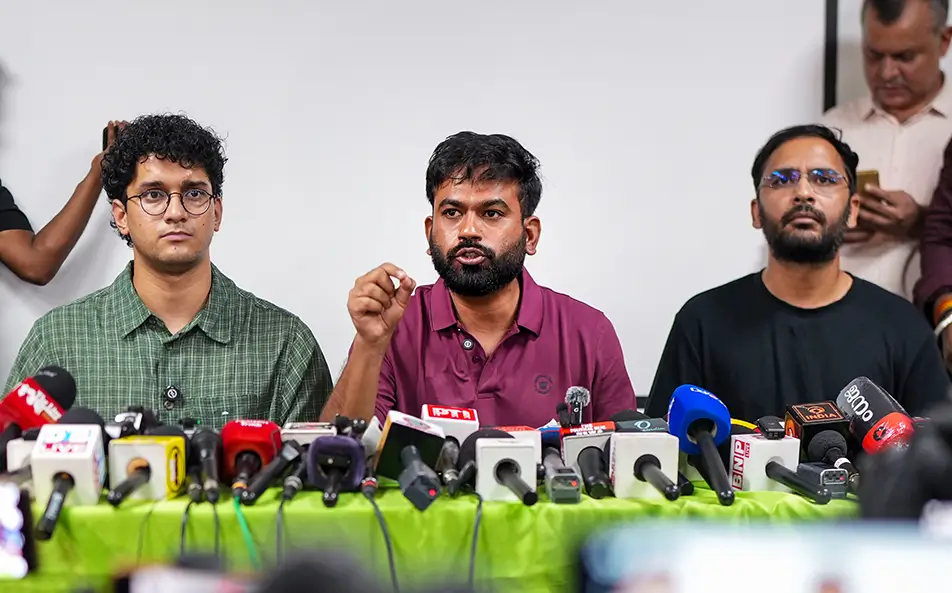
Cockroach Janta Party leaders have claimed that the government may arrest senior members of the youth-led movement before its planned October 10 demonstration in Delhi, as protests over the Special Intensive Revision of voter lists enter another politically charged phase. CJP co-convenor Saurav Das alleged on October 4 that Abhijeet Dipke, Ashutosh Ranka, Ratna Singh and other leaders could be arrested before the mobilisation. Das did not produce documentary evidence for the claim, although the organisation’s legal team said he had received information from a senior official in an unnamed agency.
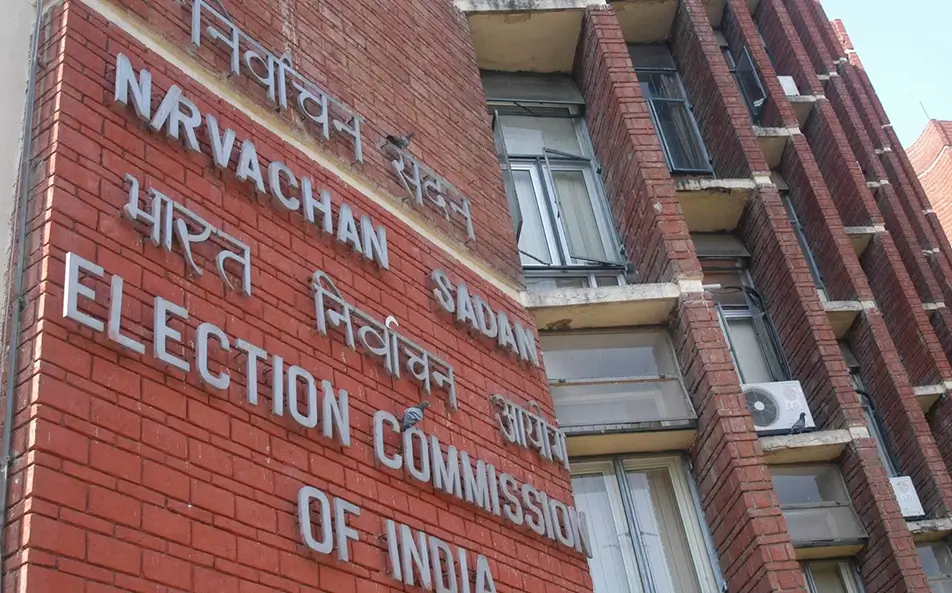
The allegation comes days after hundreds of demonstrators were detained in Delhi during protests demanding Chief Election Commissioner Gyanesh Kumar’s resignation over the revision of electoral rolls. The Election Commission rejects claims of partisan manipulation and says the SIR is intended to remove duplicate, deceased and otherwise ineligible entries while ensuring eligible voters are registered.
Abhijeet Dipke responded to the possibility of arrests by signalling that the October 10 mobilisation would proceed regardless of action against individual organisers. In a social-media post, Dipke questioned how many protesters authorities could arrest and claimed people would travel to Delhi from across the country. Earlier, he had announced that the planned Jantar Mantar demonstration would go ahead if Gyanesh Kumar did not resign.
The Cockroach Janta Party describes the campaign as a peaceful movement centred on accountability within the Election Commission and the protection of free and fair elections. Those are the organisation’s stated aims; they do not establish that the Election Commission has manipulated an election or committed an offence. CJP leaders have also urged supporters to continue protesting even if its senior organisers are detained. Ashutosh Ranka said he had separately been told by multiple sources that he, Das and Dipke could face arrest under the National Security Act or similar provisions. That claim, too, has not been independently verified. The Indian Express
At present, no publicly available arrest warrant, detention order or police notice cited in the reporting confirms a plan to arrest the CJP leadership before October 10. Hindustan Times noted that Das provided no evidence with his original claim. The Indian Express later reported that CJP legal-team head Ratna Singh said the information came from a senior officer of an unidentified agency. That attribution provides more context but does not amount to official confirmation. Hindustan Times
No Delhi Police statement located during this fact-check confirmed that Abhijeet Dipke or the other named leaders were scheduled to be arrested. The distinction matters. Recent demonstrations have resulted in large-scale preventive detentions and criminal cases, so concerns about further police action arise in a real enforcement context. But past detentions do not prove that authorities have prepared a specific future arrest operation against CJP leaders. For readers following protest Delhi updates, the safest formulation is therefore that CJP claims arrests may occur—not that arrests have been ordered.
The movement is demanding Gyanesh Kumar’s resignation over controversy surrounding the nationwide Special Intensive Revision. CJP and opposition groups allege that eligible voters have been removed improperly and argue that questions over the process undermine confidence in free and fair elections. The Election Commission disputes the broader allegations. It says the revision is designed to improve the accuracy and integrity of voter lists, including by deleting deceased, duplicate and ineligible entries. On October 2, it also ordered a special drive in states where the SIR had concluded to identify eligible people left out of the revised electoral rolls. Booth Level Officers were instructed to compare old and new lists, conduct verification and help eligible citizens submit Form 6 applications.
That development is important because it shows the Commission has acknowledged the need to identify eligible voters who may not appear on final revised lists, while continuing to defend the SIR itself.
The most significant new development on October 5 came from the Supreme Court. A Bench led by Chief Justice Surya Kant issued notices seeking responses from the Union government, the Election Commission, Kumar, Election Commissioners Sukhbir Singh Sandhu and Vivek Joshi and other senior poll officials. The petitions question whether some decisions connected with the SIR were taken without the concurrence required within the multi-member Commission. Bar and Bench - Indian Legal news
The court did not accept the request to immediately suspend the CEC. It said the respondents should first be allowed to explain how the decisions were taken. The Bench also indicated that if evidence later showed that certain decisions lacked the legally required concurrence, those decisions could be reconsidered. This is a procedural development, not a finding of misconduct. The Supreme Court has neither removed Kumar nor declared the SIR unlawful.
The current controversy intensified after an Indian Express investigation reported that Election Commissioners Sandhu and Joshi recorded objections at least 14 times over roughly 10 months. According to the investigation, the concerns included changes to voter-registration procedures, appeals involving voter inclusion and deletion, access to digital voter data and other SIR-related decisions. The Election Commission did not dispute the existence of the reported notes but described differing views as part of its internal decision-making process. It maintains that final decisions were unanimous.
That distinction is central to the dispute. The existence of internal objections is documented in the reporting. Whether those objections mean legally invalid decisions were taken is now among the questions being put before the courts.
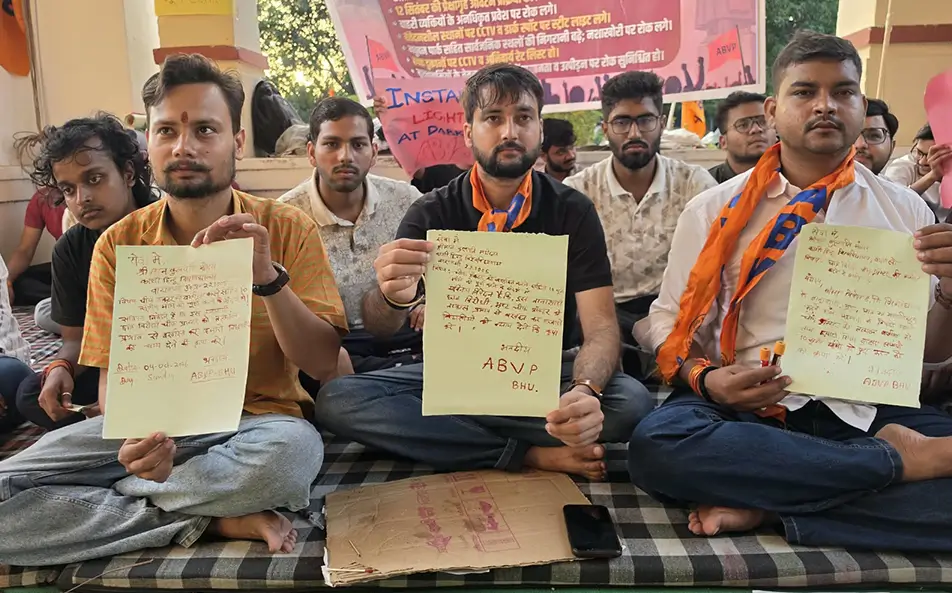
The October 10 mobilisation follows several days of demonstrations around Jantar Mantar and central Delhi. On October 2, around 550 people were detained as protesters linked to AAP, Left student organisations and civil-society groups attempted to reach Jantar Mantar. The Cockroach Janta Party simultaneously held a large demonstration at Mumbai’s Shivaji Park.
Protests continued in Delhi over the following days. Reuters reported that some demonstrators breached barricades and surrounded vehicles carrying detainees, while police repeatedly prevented gatherings in areas where restrictions were in force.
Delhi Police has said Section 163 of the Bharatiya Nagarik Suraksha Sanhita is in force across New Delhi district, restricting gatherings without prior written permission. On October 5, another 17 people were detained after camping outside Parliament Street police station. Police said they were gathered at a location not designated for protests and would be released.
For anyone searching protest Delhi developments ahead of October 10, permission and location will therefore be important. An announced Jantar Mantar rally does not automatically mean police permission has been granted.
The planned demonstration is part of a wider campaign calling for Kumar’s resignation and scrutiny of the SIR process. The Cockroach Janta Party argues that confidence in the voter-registration system is essential to democratic participation and says the October 10 mobilisation will continue even if organisers face detention.
The campaign has also sought to connect the dispute over electoral rolls with a broader debate over institutional accountability. But allegations of deliberate voter suppression or partisan manipulation remain contested. Reuters reports that demonstrators and opposition parties allege the changes favour the BJP, while both the Election Commission and BJP deny that charge.
The immediate picture is therefore more nuanced than the arrest claim alone suggests. CJP leaders say they have information that arrests may be imminent. Authorities have not publicly confirmed that claim. At the same time, recent Delhi demonstrations have involved repeated detentions, restrictions on gatherings and criminal cases, giving the October 10 mobilisation a heightened law-and-order dimension.
Everything you need to know
No arrest of Abhijeet Dipke has been confirmed in the reporting reviewed on October 5. CJP leaders are alleging that arrests could happen before October 10, but no publicly reported warrant or detention order establishes such a plan.
CJP co-convenor Saurav Das named Abhijeet Dipke, Ashutosh Ranka, Ratna Singh and himself, among others, while alleging that the government may act against senior organisers ahead of the planned mobilisation.
CJP has announced a major mobilisation for October 10, 2026, with Jantar Mantar identified as the intended protest site if CEC Gyanesh Kumar remains in office.
Current reporting confirms the protest call, but does not establish that permission has been granted. Section 163 restrictions remain in force in New Delhi district, and unauthorised demonstrations, processions and gatherings require prior written permission.
On October 5, the Supreme Court sought replies from the Election Commission, CEC Gyanesh Kumar, the other Election Commissioners and the Centre over allegations that some decisions were taken without the required collective process. The Court did not suspend Kumar or declare the SIR illegal and said it first wanted authentic information and responses. Bar and Bench - Indian Legal news



Oct 05, 2026
TUI Staff
Oct 05, 2026
TUI Staff
Oct 03, 2026
TUI Staff
Oct 03, 2026
TUI Staff
Oct 05, 2026
TUI Staff
Oct 05, 2026
TUI Staff
Oct 03, 2026
TUI Staff
Oct 03, 2026
TUI Staff

Stay informed with independent, fact-checked journalism on technology, environment, government, economy and more. India’s most trusted digital news platform.



Comments (0)
Be the first to comment!