
Ganesh Chaturthi 2026: Date, Puja Timings, Rituals, Visarjan & Everything You Need to Know
Bappa arrives with faith, festivities, rituals and joy!
 IN
Tue, Oct 27, 2026 | 02:09 AM IST
IN
Tue, Oct 27, 2026 | 02:09 AM IST


Its’ that time of the year when we are all excited to bring Bappa to our homes. And for many Indian families, that means a freshly cleaned corner of the house, flowers at the door, a plate of steaming modaks and the first joyful cry of Ganpati Bappa Morya.
But there is more to the festival than bringing an idol home. The date matters. So does the local puja muhurat. And if you are planning a longer celebration, knowing the Visarjan date can save you from last-minute confusion.
Whether this is your first Ganpati celebration or a tradition your family has followed for generations, here is a simple guide to the dates, rituals, stories and traditions behind the festival.
The Ganesh Chaturthi 2026 date is Monday, September 14. The festival falls on Bhadrapada Shukla Chaturthi, according to the Hindu lunar calendar. Drik Panchang lists the Chaturthi Tithi from 7:06 AM on September 14 to 7:44 AM on September 15.
For anyone searching the Ganesh Chaturthi 2026 date, the key thing to remember is simple: September 14 is the main festival day.
The traditional Ganesha Puja is performed during the Madhyahna period, around midday. The exact window changes with location.
For New Delhi, Drik Panchang gives the puja muhurat as 11:02 AM to 1:31 PM on September 14. The timings are local to each city.
| City | Puja Muhurat |
| New Delhi | 11:02 AM – 1:31 PM |
| Mumbai | 11:20 AM – 1:48 PM |
| Pune | 11:16 AM – 1:44 PM |
| Bengaluru | 11:02 AM – 1:28 PM |
| Hyderabad | 10:58 AM – 1:25 PM |
| Chennai | 10:51 AM – 1:18 PM |
| Kolkata | 10:18 AM – 12:46 PM |
| Ahmedabad | 11:21 AM – 1:49 PM |
Note: Panchang timings are location-specific, so readers should check their local Panchang before performing Sthapana.
If you are checking the ganesh chaturthi 2026 start and end date, there is one important catch: there isn't a single immersion date followed by every household.
The celebration begins on September 14, while Anant Chaturdashi falls on September 25, 2026, which is the major concluding day for Ganesh Visarjan. Drik Panchang confirms September 25 as the Anant Chaturdashi immersion date.
Many families, however, immerse the idol earlier. Household traditions may follow 1.5-, 3-, 5-, 7- or 10-day celebrations.
So, the ganesh chaturthi 2026 start and end date depends partly on the tradition your family follows.
Festival date: September 14, 2026
Day: Monday
Chaturthi Tithi: September 14, 7:06 AM to September 15, 7:44 AM
New Delhi Puja Muhurat: 11:02 AM to 1:31 PM
Anant Chaturdashi: September 25, 2026
Major Visarjan: September 25, subject to individual family traditions.
For many families, the beauty of the festival lies in that balance: a grand welcome, days of togetherness and, finally, the difficult but meaningful act of saying goodbye.
Bappa leaves. The faith stays.
At the heart of the Ganesh Chaturthi festival is Lord Ganesha, one of the most widely worshipped deities in Hindu traditions.
A popular account of his birth tells of Goddess Parvati creating Ganesha to guard her while she bathed. When Shiva returned, Ganesha stopped him from entering. The confrontation ended tragically, but Ganesha was later revived with an elephant's head.
There are different versions of this story in Hindu literature. What they share is Ganesha's association with auspicious beginnings and the removal of obstacles. Traditional accounts and modern cultural references also connect him with wisdom and prudence.
That is why many people begin important journeys, ceremonies and new ventures by remembering Ganesha.
Look closely at a Ganesha idol and there is a lesson in almost every feature.
The elephant head is traditionally associated with wisdom, strength and understanding. His large ears are commonly interpreted as a reminder to listen carefully. The mouse, his traditional vehicle, has been interpreted in different ways, including as a symbol of desire or ego that needs to be controlled.
These are traditional interpretations rather than one universal set of rules. D'Source's study of Ganesha's iconography, for example, discusses the ears, trunk, mouse, modak and large stomach as symbolic elements.
That makes the idol more than something beautiful to look at. For devotees, it can also serve as a visual reminder of patience, wisdom and self-control.
For many families, the most exciting moment comes before the first aarti: bringing the idol home.
The puja space is cleaned and decorated. A chowki is prepared, flowers are arranged and the idol is placed with care. Depending on family tradition, the Sthapana may include Kalash Sthapana, Pran Pratishtha, offerings and Aarti.
There is no single ritual sequence followed by every household. Regional and family customs differ, so a family's established practice should take priority.
A basic home celebration can include:
The point is not to turn the puja into a checklist. It is about creating a moment of attention and devotion.
Ask someone to name one food associated with Ganesha and chances are the answer will be modak.
Steamed ukadiche modak are especially associated with Maharashtra, while different parts of India have their own sweets and offerings. Fruits, coconut, jaggery, flowers and Durva are also commonly associated with Ganesha worship.
The exact quantities can vary. There is no need to treat one family's practice as a compulsory rule for everyone.
Ganesh Visarjan 2026 falls on Friday, September 25, on Anant Chaturdashi.
For families following shorter-duration traditions, immersion can happen earlier.
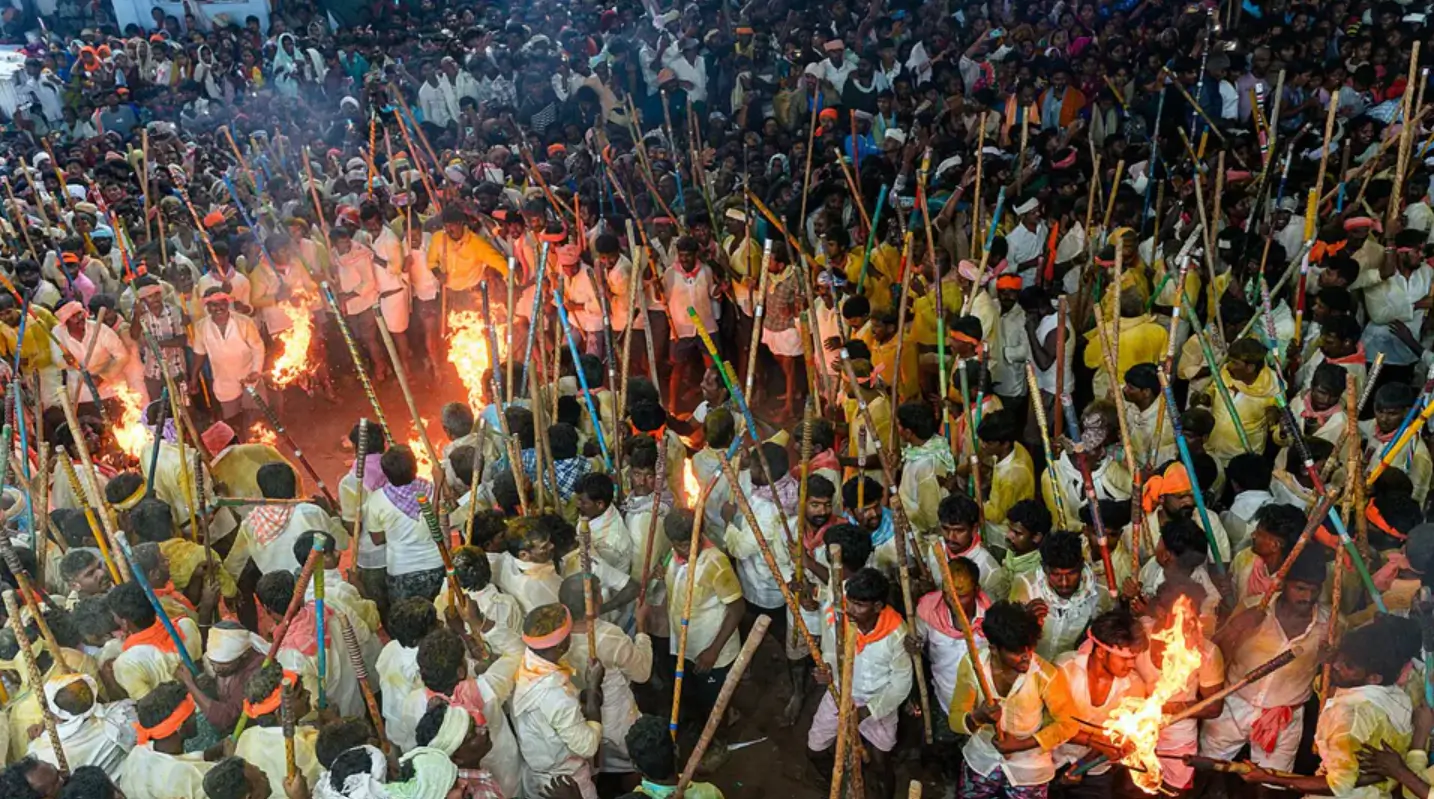
The farewell usually begins with a final puja and Aarti. The idol is then taken to the immersion site, accompanied in many places by music, dancing and chants of Ganpati Bappa Morya.
There is something deeply moving about this ritual. Bappa arrives with celebration, stays for a while and then leaves.
The immersion is often understood as a reminder of impermanence and renewal. What remains is not the physical idol, but the memory, faith and sense of togetherness created during those days.

Img Src : Reuters
The public form of the festival has a fascinating history.
Historical accounts show that public Ganesh celebrations existed in Maharashtra before the late 19th century. Bal Gangadhar Tilak played a major role in expanding the festival into an organised public event during the 1890s, using it as a space for community participation during colonial rule. The exact origins of the public festival are debated, with historians also highlighting the earlier role of figures such as Bhausaheb Rangari.
That history helps explain why modern Ganeshotsav feels so much bigger than a household puja.
In Mumbai and Pune, public mandals now combine devotion with art, music, community activities and enormous processions.
The Ganesh Chaturthi festival changes character as you travel across India.
Maharashtra is famous for its large public celebrations. In southern states, including Karnataka and Tamil Nadu, household worship and regional food traditions add their own flavour. Telangana and Andhra Pradesh are known for elaborate Vinayaka Chavithi celebrations, while Goa has its own Chavath traditions.
The details may differ, but the central idea remains familiar: welcoming Ganesha, seeking his blessings and celebrating together.
There is one modern question every celebration needs to ask: What happens after the Visarjan?
The Central Pollution Control Board's revised idol-immersion guidelines encourage naturally occurring clay, natural colours and designated temporary ponds or tanks. They also address materials such as Plaster of Paris, synthetic paints, plastic and thermocol because of their environmental impact.
The idea is simple: celebrate wholeheartedly, but responsibly.
To our TheUnitedIndian family, lets all scream
Ganpati Bappa Morya!
Everything you need to know
Ganesh Chaturthi 2026 will be celebrated on Monday, September 14, 2026.
In New Delhi, the Madhyahna Puja Muhurat is 11:02 AM to 1:31 PM on September 14, 2026. Timings vary by city.
The festival begins with Ganesh Chaturthi on September 14. The major Visarjan associated with Anant Chaturdashi falls on September 25, 2026.
The Ganesh Chaturthi festival celebrates the birth of Lord Ganesha, who is revered as the remover of obstacles and a symbol of wisdom and auspicious beginnings.
The major Ganesh Visarjan will take place on Friday, September 25, 2026, coinciding with Anant Chaturdashi.

Oct 26, 2026
TUI Staff
Oct 26, 2026
TUI Staff
Oct 25, 2026
TUI Staff
Oct 23, 2026
TUI Staff
Oct 26, 2026
TUI Staff
Oct 26, 2026
TUI Staff
Oct 25, 2026
TUI Staff
Oct 23, 2026
TUI Staff

Stay informed with independent, fact-checked journalism on technology, environment, government, economy and more. India’s most trusted digital news platform.


Comments (0)
Be the first to comment!