
When Don Bradman Met Dhyan Chand: The Adelaide Story That Still Defines National Sports Day
The Don Watched the Wizard
 IN
Thu, Oct 15, 2026 | 07:37 PM IST
IN
Thu, Oct 15, 2026 | 07:37 PM IST

On May 2, 1935, two of the greatest sports legends of their generation met in Adelaide. One was Don Bradman, already establishing himself as cricket’s defining batsman. The other was Dhyan Chand, captain of the visiting Indian hockey side and already a two-time Olympic gold medallist. Their meeting began at a formal civic reception at Adelaide Town Hall. Later that day, Bradman went to Adelaide Oval and watched India dismantle South Australia 10-1 in what the hockey great later recalled was the Australian cricketer’s first experience of watching the sport.
More than 90 years later, that afternoon remains part of Indian hockey folklore. And every August 29, when India marks National Sports Day on the hockey icon’s birth anniversary, the meeting of the Don and the Wizard inevitably returns to the spotlight.
The encounter was not a chance meeting. During India's 1935 tour, the hockey captain expressed a desire to meet Bradman. Assistant manager Pankaj Gupta worked with local authorities, and the Australian cricket star was invited to a reception organised for the Indian team at Adelaide Town Hall. Bradman did more than simply shake hands with the visitors.
At the reception, he publicly acknowledged India's superiority at hockey, saying the Indians were better exponents of the game than Australians and that local players could learn from watching them. He also expressed hope that the hockey tour would eventually be followed by an Indian cricket tour of Australia.
That wish would eventually come true in 1947-48, when India toured Australia for a Test series captained by Bradman. But first came the hockey.
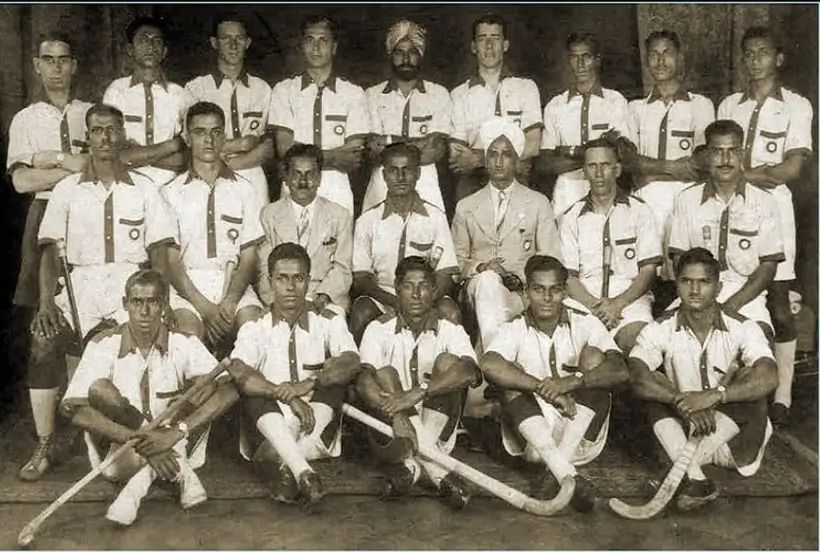
After the Town Hall reception, India faced South Australia at Adelaide Oval. The match quickly became one-sided. India raced to a 7-0 lead by half-time and eventually won 10-1. Roop Singh scored four goals, Lourie Davidson struck three, Peter Fernandes added one and the Indian captain scored twice. For Don Bradman, it was an extraordinary introduction to elite hockey. The Australian had built his sporting reputation by making huge cricket scores look routine. At Adelaide Oval he watched another athlete and another team produce the same sense of inevitability with a hockey stick.
It is from this encounter that one of Indian sport's most repeated quotes emerged. Bradman is widely credited with telling the hockey great: “You score goals like runs in cricket.”
Versions differ slightly. Some later accounts render it as “He scores goals like runs in cricket” or “He scores goals like we score runs in cricket.” There does not appear to be a surviving contemporary Australian transcript establishing one definitive wording. So it is safer to describe the sentence as a famous comparison attributed to Bradman rather than reproduce it as an unquestionable verbatim record. The comparison itself, however, has been recorded for decades.
The meeting clearly mattered to the Indian captain personally. In his autobiography Goal!, he recalled Bradman's visit as one of the exciting moments of the tour and remembered posing for a photograph with the Australian, alongside Roop Singh and Pankaj Gupta. He described the photograph as something he would cherish.
That detail adds something often lost when stories about famous sports legends are reduced to statistics. Bradman was not simply a celebrity brought in as a ceremonial guest. He represented sporting excellence at a level that the Indian players themselves understood and respected.
And the admiration worked both ways.
The Adelaide performance came during the golden age of Indian hockey. India had already won Olympic hockey gold in Amsterdam in 1928 and Los Angeles in 1932. A year after the Adelaide meeting, Chand captained the team to another gold medal at the 1936 Berlin Olympics. Those three consecutive titles helped create an international reputation that stretched far beyond India's borders.
The Adelaide story illustrates that reputation particularly well. India was still under British rule. Its cricket team had only entered Test cricket in 1932. Yet in hockey, the country was already setting the global benchmark. That is why the meeting with Bradman carries more historical weight than a simple celebrity photograph. One of Australia's most famous athletes had come to see what the visitors could do. India responded with ten goals.
August 29 marks Chand's birth anniversary and is observed across India as National Sports Day. In 2026, the occasion marks his 121st birth anniversary. The government has expanded this year's observance into a three-day nationwide campaign from August 28 to 30 under the pillars “Tribute, Play, and Move.” The celebrations include the “Ek Ghanta Khel Ke Maidan Mein” initiative, encouraging people, particularly young Indians, to devote at least an hour to sport and physical activity. The historical connection is therefore hard to miss.
Modern India is trying to build a broader sporting culture. The career being commemorated comes from an era when Indian hockey was not aspiring to global recognition — it already possessed it. The three consecutive Olympic hockey gold medals remain central to that legacy.
There are many stories attached to India's hockey icon, and some have become difficult to separate from legend over the decades. The Adelaide meeting stands on firmer ground.
The date is known. The Town Hall reception is documented. The match happened. India won 10-1. Bradman watched. And Chand later wrote about meeting him. The only part requiring caution is the exact wording of the famous goals-and-runs quotation, which has appeared in several slightly different forms over the years.
That uncertainty hardly weakens the story. On May 2, 1935, two men who dominated entirely different sports stood together in Adelaide. A few hours later, one watched the other help demonstrate why India's hockey team had become feared around the world. Ninety-one years later, the scoreboard remains striking: India 10. South Australia 1. And somewhere in the Adelaide Oval stands was Don Bradman, watching the Wizard at work.
Everything you need to know
The meeting took place on 2 May 1935 in Adelaide, at a civic function attended by the touring Indian hockey team, according to Hindustan Times and India Tribune accounts based on Dhyan Chand's autobiography.
India led 7-0 at half-time and won 10-1, with Roop Singh scoring four goals, Lourie Davidson three, Peter Fernandes one and Dhyan Chand two, per Hindustan Times.
The line is widely repeated in Indian media and by Dhyan Chand's son Ashok Dhyan Chand, but no primary Australian source or direct Bradman writing confirms the exact wording, so it is treated as a well-known anecdote rather than a verified quote.
Oct 09, 2026
TUI Staff
Oct 06, 2026
TUI Staff
Oct 06, 2026
TUI Staff
Oct 05, 2026
TUI Staff
Oct 15, 2026
TUI Staff
Oct 15, 2026
TUI Staff
Oct 15, 2026
TUI Staff
Oct 14, 2026
TUI Staff

Stay informed with independent, fact-checked journalism on technology, environment, government, economy and more. India’s most trusted digital news platform.



Comments (0)
Be the first to comment!