
Mathura Travel Guide: The Sacred City That Feels Chaotic at First, But Stays With You Forever
Faith Meets Heritage
 IN
Sat, Oct 10, 2026 | 03:11 AM IST
IN
Sat, Oct 10, 2026 | 03:11 AM IST

Nobody is really prepared for the first feeling of Mathura. You might think of a serene sacred city, with peaceful temple bells and pilgrims strolling around in peace. But the actual city does not present itself in such a gentle manner. It's filled with traffic, shopkeepers shouting, scooters maneuvering through the streets, priests escorting tourists, monkeys keeping tabs from rooftops, and the aroma of sweets. At first, it may even feel too much. Then slowly, something changes. The same noise begins to feel like rhythm. The same crowded lanes start making sense. You realise that this place is not trying to look peaceful for visitors. It is alive in its own way. It is spiritual, but not silent. Sacred, but not polished. Old, but still moving every minute. That is what makes the city stay in your mind.
Many places need a guidebook before they begin to make sense. Here, the city starts speaking before anyone explains it. You see people carrying flowers and prasad. You see families walking together, some tired, some excited, some clearly visiting after years of planning. You hear someone asking for directions to a temple. You see another person sitting quietly near a shop, eyes closed, as if the crowd around him does not exist.
This is where the city becomes personal. It is not only about big monuments or famous names. It is also about small scenes that pass quickly but stay with you. A mother fixing her child’s tilak. An old man counting prayer beads. A young couple stopping at a sweet shop before darshan. A group of travellers arguing with an auto driver and laughing two minutes later. These are not the things usually written on travel boards. But these are the things that make the place feel real.
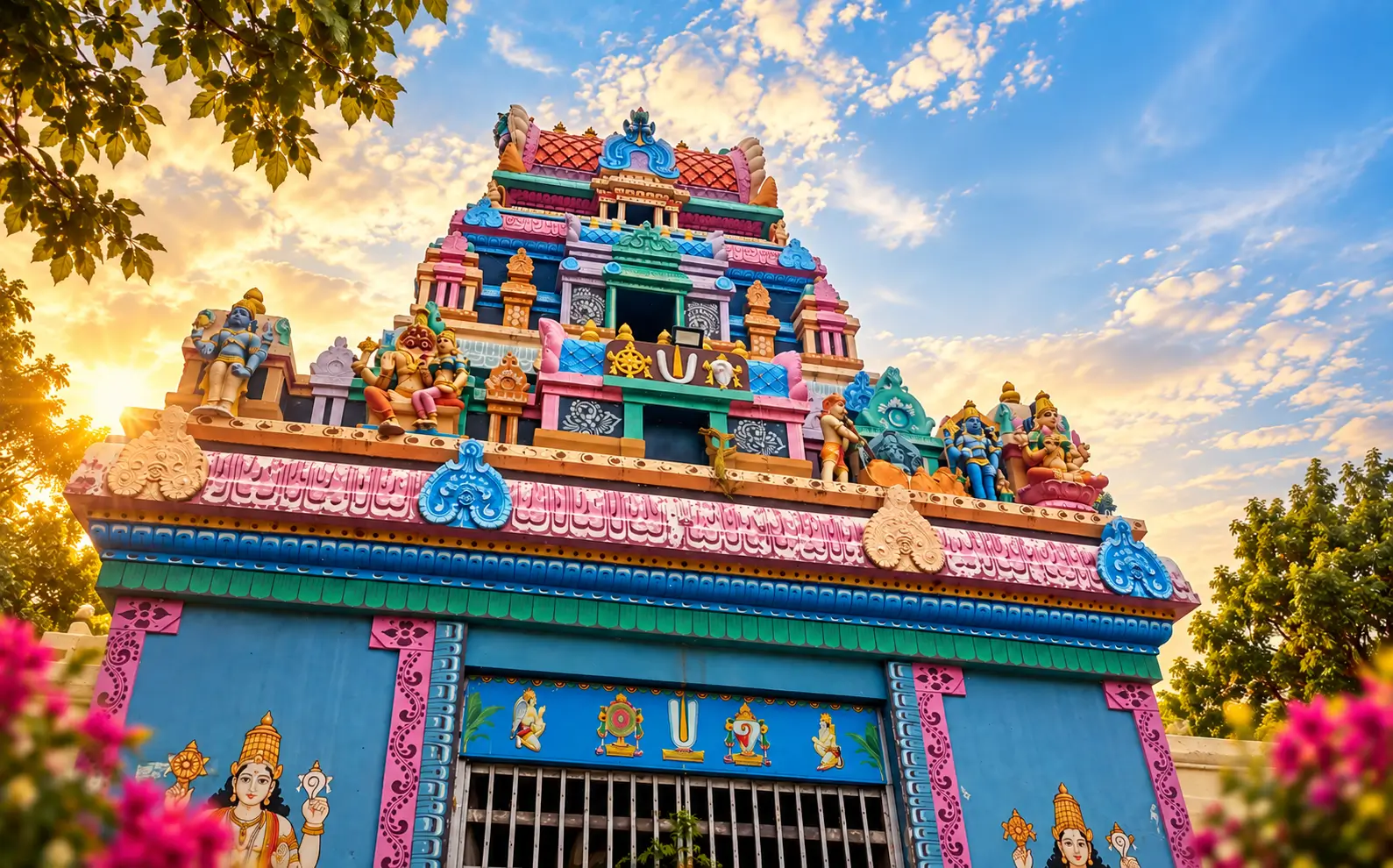
For many, this city is not new when they visit for the first time. Not from familiarity with its roads, but its stories. The name is associated with Krishna and to songs played at festivals, to bedtime stories, to plays in school, to pictures in the calendar set in old walls, to decorations for Janmashtami at home, and to the way of speaking the old people would use when talking about Braj. Thus, when you finally walk through its lanes it is not as if you are in a different setting. It's like you're standing in something you know a lot about for years. That's the unique charm of this town. It is a thing of the past and memory. It's a real location with dust, traffic, shops and railway platforms, but it also has an emotional dimension which many people are already familiar with from their childhood.
Near the Janmasthan area, the city begins to feel different. The crowd becomes heavier. Shops selling flowers, malas, small idols and prasad appear one after another. Some visitors keep looking around, trying to take everything in. Some walk faster because they are eager for darshan. Some carefully hold the hands of older family members. There is a seriousness in the air, but it is not heavy. It feels emotional. Many people come here with something personal. A wish, a family promise, a prayer, or a feeling they may not say out loud. That is why the place feels charged. It is not only the temple that matters. It is also the emotion people bring with them.
If there is one time when the city completely changes its face, it is Krishna Janmashtami. The temples are decorated, the streets become crowded, and the excitement builds through the day and night. People become more numerous. The shops selling flowers, malas, small idols and prasad are in succession. For someone seeing it for the first time, it can feel overwhelming. There is sound everywhere. Devotees arrive in huge numbers. Families plan their visit carefully. Local shops stay busy. Police and volunteers manage crowds. And still, beneath all the noise, there is a very human feeling — people have come because this day means something to them. It's like everyone is in a serious mood. But some visitors continue looking around, attempting to imbibe it all. Some walk fast due to their desire for Darshan. Some gently hold hands of older family members. That is the beauty of festivals here. They are not only events. They are inherited emotions.
This is a completely different mood of the city due to Yamuna. The river side is a pause from temple lanes, the crowds and the constant movement. But it's not always a pretty place to be in pictures, and perhaps that makes it feel more authentic. Towards the evening, the voice of the city metamorphoses a little at Vishram Ghat. The rush can not completely disappear but it becomes softer. You witness people who pray, families who sit silent, priests who call out, and lamps that float and the river that carries them all along without saying a word. There are some people who go there to perform rituals. Some just sit and watch. Some appear exhausted due to walking around the city all day. But, it appears almost everyone slows down about a few minutes. This is what the Yamuna does. Does not make the city silent but gives it breathing space.
No one can write about this city without talking about food. The one thing people talk about is Peda and well, it's right when it comes to Peda. Many come away with a box; as though the sweet itself is an attestation they came here. But unlike peda, it is not the only taste of the city. It's in hot kachoris for breakfast, thick lassi without any fanfare, simple vegetarian food, temple prasad and tea that tastes better because of all the hustle and bustle. Nothing here is too upscale and this is a good thing. But the food is of the lanes, it's of the people, it's of the mood of the city. It is simple, satisfying and full of personality. The food here does not try to be fancy. That is exactly why it works. It belongs to the place.
In fact, Mathura Junction is the place where journey indeed starts for many travellers. It's the usual railway ambience in India — bags, families trying to keep together, auto drivers calling out, food stalls, hotel boards and a lot of confusion that somehow works. The temples, ghats or Vrindavan can be easily reached from the station. Finding of autos and local transport is easy, but bargaining and patience helps. But this is an area where haste is not necessarily the better part of valor. In some ways it's a danger to try to get everything done as if it's a checklist, and end up seeing the big names and not seeing the true spirit of the region. Braj requires a little bit of time. It makes its way out slowly in the Lanes, discussions, food stops, aartis and all manner of unscheduled halts.
This city may not be welcoming to first timers. The roads can be busy and the lanes narrow, and traffic can make you want to throw up, and on festival days it can be too much. Certain areas may appear more pristine, while others can be more overwhelming. But perhaps the story of old sacred cities in India is the same as well. Sacred cities in India are not always polished. They are lived in. They carry devotion, business, noise, dust, memory and survival together. And somehow, even with all this, the city stays powerful.
What remains after leaving is not only the image of a temple or a riverbank. It is the sound of a bhajan from a lane you did not plan to enter. It is the old woman walking slowly with flowers in her hand. It is the child asking his parents for peda. It is the evening light touching the Yamuna. It is the feeling that some places are still held together by belief. That is why Mathura continues to matter. It is not just an ancient city. It is a living memory.
For The United Indians, this story is about more than pilgrimage. It is about the way India keeps its heritage alive in public life. In Braj, culture is not hidden behind glass. It is carried by pilgrims, sweet makers, priests, shopkeepers, families, songs, festivals and everyday faith. That is what makes the region special. It reminds us that India’s old stories are not gone. They are still being walked, sung, cooked, celebrated and remembered.
Everything you need to know
Mathura does not feel silent or polished. It is crowded, noisy, emotional and alive, but that is exactly what makes the city powerful for many visitors.
Many visitors begin with the Janmasthan area because of its deep connection with Krishna. The lanes around it are full of shops, flowers, prasad and pilgrims coming for darshan.
No. Temples are important, but Mathura is also about the Yamuna ghats, Braj culture, food, festivals, old stories, local lanes and the everyday faith of people.
Mathura is best known for peda, but visitors also enjoy kachori, jalebi, thick lassi, simple vegetarian meals, tea and temple prasad.
Krishna Janmashtami is the most powerful time if you want the full festival mood, but it is also very crowded. Even regular evenings near Vishram Ghat can feel peaceful and memorable.


Oct 08, 2026
TUI Staff
Oct 06, 2026
TUI Staff
Oct 01, 2026
TUI Staff
Sep 30, 2026
TUI Staff
Oct 09, 2026
TUI Staff
Oct 09, 2026
TUI Staff
Oct 09, 2026
TUI Staff
Oct 09, 2026
TUI Staff

Stay informed with independent, fact-checked journalism on technology, environment, government, economy and more. India’s most trusted digital news platform.




Comments (0)
Be the first to comment!