
India’s First Urban Night Safari Moves Ahead After Supreme Court’s Conditional Nod
India’s Night Safari Test
 IN
Fri, Oct 16, 2026 | 05:44 PM IST
IN
Fri, Oct 16, 2026 | 05:44 PM IST

The Supreme Court has cleared the Uttar Pradesh government’s night safari and zoological park project at Kukrail Reserve Forest in Lucknow, giving India’s first urban night safari a conditional green signal after a long-running legal challenge.
A three-judge bench led by Chief Justice of India Surya Kant, with Justices Joymalya Bagchi and V Mohana, allowed the state to proceed on Wednesday, July 15, 2026, according to PTI and LiveLaw. The clearance does not mean the original plan can move ahead unchanged. It sets up a fresh test of how much development one of Lucknow’s most important green lungs can absorb while staying within environmental safeguards.
The Court’s approval is conditional. The Uttar Pradesh government must follow the safeguards laid down by the Central Empowered Committee, the Central Zoo Authority, the Ministry of Environment, Forest and Climate Change and other regulatory authorities before moving ahead with the project.
The bench also built in continuing oversight. It directed the CEC to visit the site and check whether the conditions are being followed, with a report to be filed after three months, PTI reported. The Court also allowed some litigants to submit suggestions to the CEC.
During the hearing, Chief Justice Surya Kant pushed back against the idea that the project should be stopped altogether. “Should this country remain in a standstill? Zoos are old now. Experts are there to look at all this,” he said, according to PTI. The bench added that precautionary measures could be taken once experts examine the project and impose conditions.
The case sits inside the larger matter of Ashok Kumar Sharma (IFS, Retd.) & Ors. v. Union of India, which is connected to challenges around forest conservation law and environmental permissions.
Even as it cleared the way forward, the CEC trimmed the plan. It rejected the state's proposal to shift the 72-acre Lucknow Zoo into Kukrail, and it asked authorities to widen the existing forest road into a two-lane route rather than the four-lane corridor originally planned, LawBeat reported. An adventure zone with a tram service and an augmented reality theatre, part of the original pitch, has been scrapped altogether.
What remains is still large. The project, split into two phases, spans the 5,000-hectare Kukrail Reserve Forest and carries an estimated cost of about Rs 1,500 crore, according to LawBeat. Additional Solicitor General KM Nataraj told the bench it is "a very ambitious project of the state, first of its kind in India and third or fourth in the world," per LiveLaw.
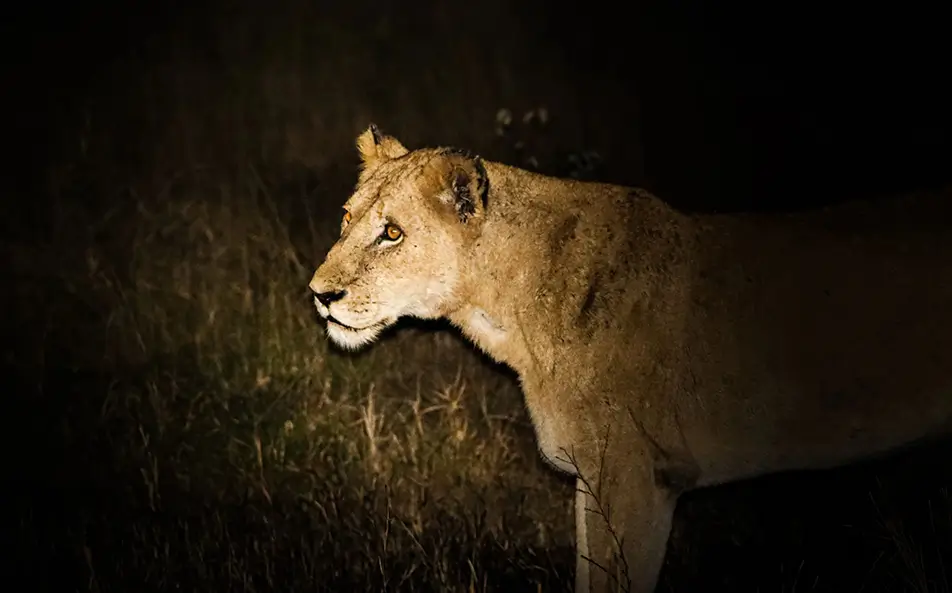
Kukrail Reserve Forest is not just open land waiting for development. It is one of Lucknow’s few large urban forest spaces and is closely linked to the city’s ecological balance. The area also houses the Kukrail Gharial Rehabilitation Centre, which has played a role in conserving endangered gharials since the late 1970s.
The forest is home to birds, reptiles, amphibians and other wildlife. Scroll.in reported that Kukrail has 39 amphibian and reptile species, including 14 frog species, two turtle species, one crocodilian, eight lizard species and 14 snake species. Some of these species fall under threatened categories on the IUCN Red List.
That ecological weight is what fuelled public opposition even before the matter reached the Supreme Court. The Save Kukrail campaign, run by the citizen group There Is No Earth B, has argued that the project weakens the eco-tourism label attached to it. Campaigner Bhawna Tanwar told Scroll.in, “We keep hearing about ‘eco-tourism,’ but there’s nothing ‘eco’ about cutting down 1,500 trees or displacing the wildlife that makes this place so special.”
The Court’s order changes the project from a stalled proposal into a monitored development plan. That is a major shift. But it also means the Uttar Pradesh government now has to prove that the project can be built without ignoring the safeguards that helped secure approval in the first place.
Tree-felling will have to be limited to what is essential for redesigning, realignment and engineering modifications. PTI reported that the CEC has called for a 1:10 replacement ratio, meaning ten trees must be planted for every tree cut. An oversight committee will also be needed to ensure compliance with environmental requirements, with periodic inspections under the supervision of the CEC and CZA.
For now, the litigation pressure has eased, but the environmental test has only begun. Kukrail will show whether Indian cities can create new wildlife tourism spaces without treating their remaining urban forests as empty land.
Everything you need to know
On July 15, 2026, a Supreme Court bench led by Chief Justice Surya Kant allowed the Uttar Pradesh government to proceed with its night safari and zoological park project at Kukrail Reserve Forest in Lucknow, subject to conditions set by the Central Empowered Committee and the Ministry of Environment, Forest and Climate Change.
The CEC rejected a plan to shift the Lucknow Zoo into Kukrail, ordered a two-lane road through the forest instead of a four-lane corridor, and scrapped a planned adventure zone with a tram service and augmented reality theatre.
The Supreme Court directed a CEC member to periodically visit the site and file compliance reports with the Court, with the first report due within three months of the July 15, 2026 order.





Oct 15, 2026
TUI Staff
Oct 15, 2026
TUI Staff
Oct 14, 2026
TUI Staff
Oct 15, 2026
TUI Staff
Oct 15, 2026
TUI Staff
Oct 15, 2026
TUI Staff
Oct 14, 2026
TUI Staff

Stay informed with independent, fact-checked journalism on technology, environment, government, economy and more. India’s most trusted digital news platform.







Comments (0)
Be the first to comment!