
NCERT Class 8 Book Update: Judiciary Backlog and Corruption Concerns Spark Classroom Debate
Textbooks Trigger Talk
 IN
Mon, Oct 12, 2026 | 10:54 AM IST
IN
Mon, Oct 12, 2026 | 10:54 AM IST

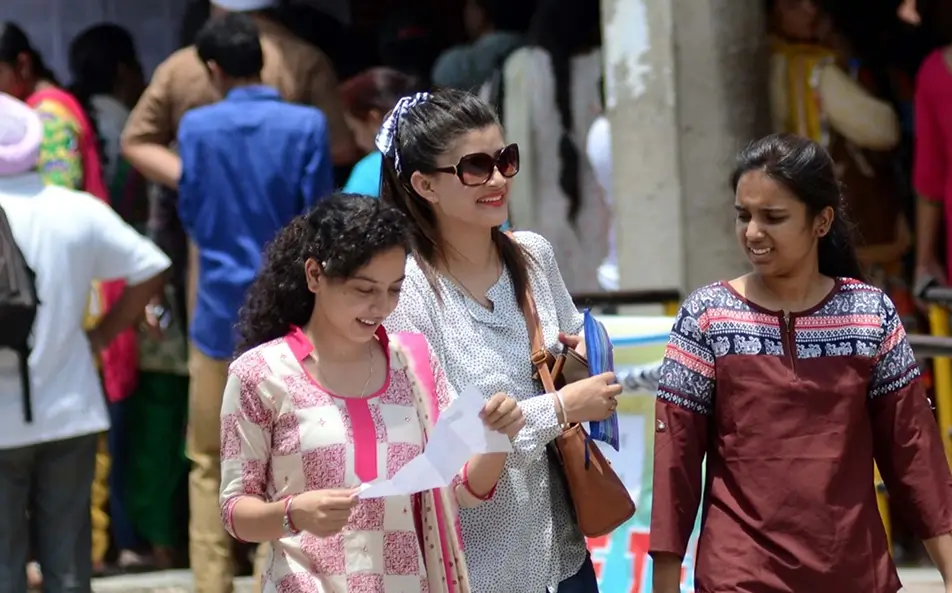
In several classrooms, a routine civics period felt different as students paused at a paragraph on court delays. The chapter, introduced by NCERT, mentioned the scale of pending cases and briefly noted concerns that have been part of public debate for years. For the students, the numbers were new. For the teacher, the reaction was familiar: raised hands, tentative questions, and a short discussion that ran past the bell.
Scenes like this have been reported by teachers elsewhere too. The figures-thousands of cases in the Supreme Court, lakhs in High Courts, and crores in district courts-didn’t lead to arguments; they led to curiosity. “Why does it take so long?” one student asked. Another wondered whether delays change people’s lives. The lesson didn’t provide full answers, but it did something textbooks rarely manage: it lingered.
Teachers say the NCERT social science class 8 textbook isn’t heavy on commentary. It states the challenge and moves on. But that brevity has created room for discussion. Some educators see this as a positive- shift students connecting civics to the world they hear about at home or see in the news. Others prefer to slow the conversation down, adding context so that young learners don’t draw quick conclusions from a complex system.
In staff rooms, the talk has been measured rather than heated. A few teachers say they use the paragraph to explain how institutions evolve and how reforms take time. Others frame it as an example of why public systems require both patience and participation. Either way, the lesson has become a prompt.
Backlog can sound abstract until it’s placed next to everyday life. Teachers sometimes share simple examples: a property dispute that drags on, a small business waiting for a ruling, a family hoping for closure. The point isn’t to dramatise, they say, but to help students understand that statistics often represent people and time.
Mentioning such realities in a school book does not judge the system; it acknowledges that processes can be slow and complicated. That nuance is important. For students, it introduces the idea that institutions are built by people and can improve over time-an early glimpse into civic awareness.
The inclusion of real-world references fits with broader curriculum thinking shaped by the National Curriculum Framework and the National Education Policy 2020. Both have pushed classrooms toward discussion, context, and critical thinking. The aim isn’t to turn students into policy analysts but to help them see how lessons connect with lived experiences.
Parents’ reactions have varied. Some appreciate the honesty and the chance for meaningful conversation at home. Others ask for more guidance around sensitive topics. Most agree that how a teacher frames the discussion matters more than the paragraph itself.
By exam time, the paragraph will likely become another answer to memorise. But for some students, the questions raised may stick longer than the facts. A short classroom exchange, a follow-up chat at home, a teacher’s example small moments that shape how young learners view public institutions.
The chapter won’t fix delays or settle debates. It wasn’t meant to. Yet it has nudged a quiet shift in classrooms: from reading about civics to noticing it. And sometimes, that nudge is the real lesson.
A brief textbook reference to court delays has led to thoughtful classroom exchanges, showing how small curriculum updates can prompt bigger reflections on justice and civic life.
Everything you need to know
The chapter briefly mentions challenges like delays in court cases and the pressure created by a large number of pending matters, giving students a basic idea of how the system faces real-world issues.
It stood out because topics usually discussed in news or public debates have now appeared in a school lesson, which naturally sparked curiosity among students, teachers, and parents.
Teachers say students are mostly curious. Many are asking simple questions about why cases take time and how justice systems work, turning the lesson into a discussion rather than just reading.
Not directly. It mainly introduces the concept of case backlog and challenges, leaving room for teachers to explain context and help students understand that institutions evolve over time.
The main takeaway is awareness. Students get an early understanding that public institutions are complex and continuously improving, which can encourage thoughtful engagement with civic topics later in life.




Oct 09, 2026
TUI Staff
Oct 09, 2026
TUI Staff
Oct 09, 2026
TUI Staff
Oct 09, 2026
TUI Staff
Oct 09, 2026
TUI Staff
Oct 09, 2026
TUI Staff
Oct 09, 2026
TUI Staff
Oct 09, 2026
TUI Staff

Stay informed with independent, fact-checked journalism on technology, environment, government, economy and more. India’s most trusted digital news platform.







Comments (0)
Be the first to comment!