
House of the Dragon Season 3: Why Aegon Is Winning Fans While Rhaenyra Turns Ruthless
The Targaryen civil war has changed everything - including who viewers want to win.
 IN
Sat, Sep 26, 2026 | 04:01 AM IST
IN
Sat, Sep 26, 2026 | 04:01 AM IST


Spoilers ahead.
What if the biggest twist of the Targaryen civil war isn't a dragon burning a city - but the audience changing sides?
That is what makes the story so fascinating. Rhaenyra Targaryen, once the emotional centre of the Black cause, is becoming harder to root for. Aegon, once one of Westeros' least sympathetic royals, is becoming unexpectedly human.
The shift isn't because Aegon has suddenly become a hero. He hasn't. In House of the Dragon Season 3, the war exposes Aegon's pain while power exposes Rhaenyra's darker side.
Rhaenyra's original claim was deeply personal. Her father, Viserys I, named her heir, yet a patriarchal succession system allowed Aegon to be crowned instead. What began as a fight over legitimacy has become a brutal struggle for survival.
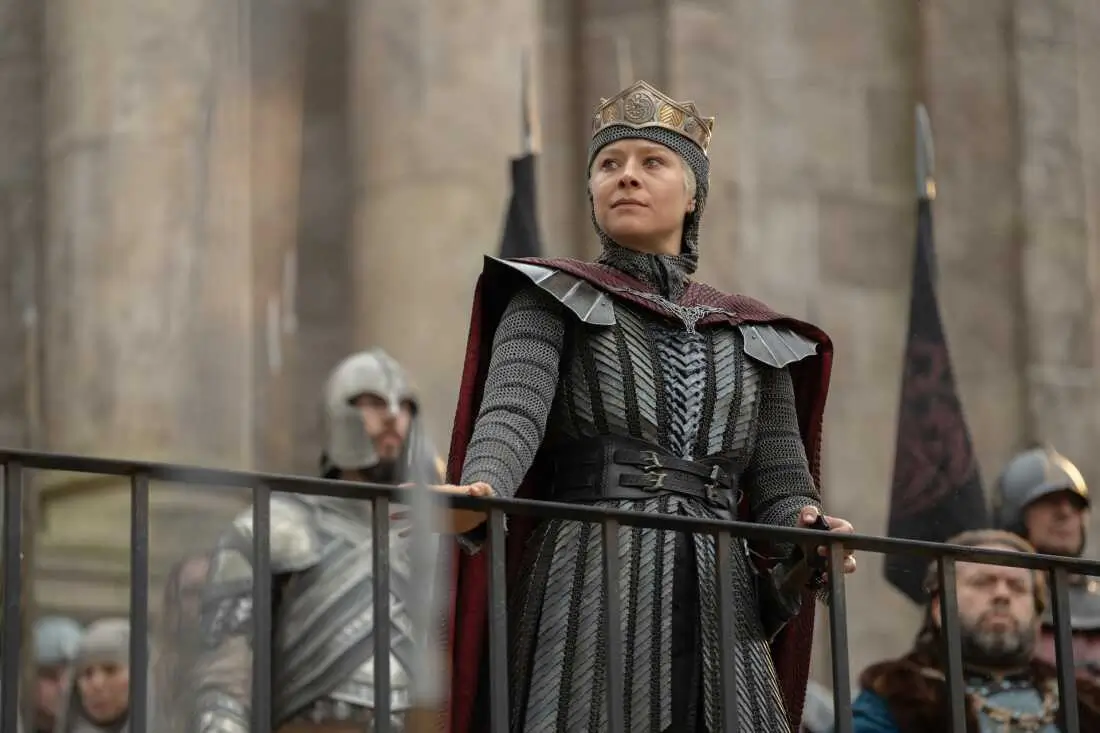
In the finale, Rhaenyra is increasingly willing to use force. When the High Septon refuses to recognise her, she responds with violence. She also invokes the Targaryen prophecy publicly, declaring that she is the prince that was promised.
A Forbes finale review argues that the prophecy can distract from the stronger political conflict of succession, ambition and the unequal rules governing men and women. The same concern appears in the reference article provided for this story.
For viewers following House of the Dragon Season 3, the bigger issue is what the prophecy says about Rhaenyra. She no longer seems satisfied with reclaiming what she believes was promised to her. The throne increasingly looks like a destiny that justifies almost any sacrifice.
The clearest evidence comes through the people closest to her.
Helaena refuses to eat and tells Rhaenyra that everything around her is ugly. Rhaenyra responds by ordering her guards to force-feed her. Later, Helaena dies after falling from a window.
Helaena's final decision remains open to interpretation, and the Forbes review questions whether the show's version is as convincing as the book's more ambiguous account.
Then there is Mysaria. Rhaenyra dismisses her master of spies despite her knowledge of the court. Mysaria soon becomes a problem, telling Helaena that Aegon is alive and that her child could become a hostage.
Even Baela challenges Rhaenyra, accusing her of treating people like tools.
Put together, these moments show a queen winning battles while losing emotional connections.
The Iron Throne may be closer than ever, but the price is becoming harder to ignore.
Img Src : NPR
Aegon hasn't become innocent. What has changed is our view of him. After devastating injuries, he is damaged, frightened and desperate to regain control of his life.
His reunion with Aemond at Harrenhal is particularly revealing. Aemond appears humbled, while Aegon remains furious about his brother's betrayal. Their conversation feels less like rivalry and more like two damaged brothers trying to understand what is left of their family.
Viewers don't have to approve of Aegon's actions to understand his suffering. The Forbes review also notes the reversal in audience sympathy.
That vulnerability matters because it gives Aegon something he lacked earlier in the story: emotional complexity.
He is still flawed. He is still fighting for a crown. But now audiences can see the human being underneath the king.
If Rhaenyra's transformation is the emotional story, the Battle of Tumbleton is the spectacular centrepiece.
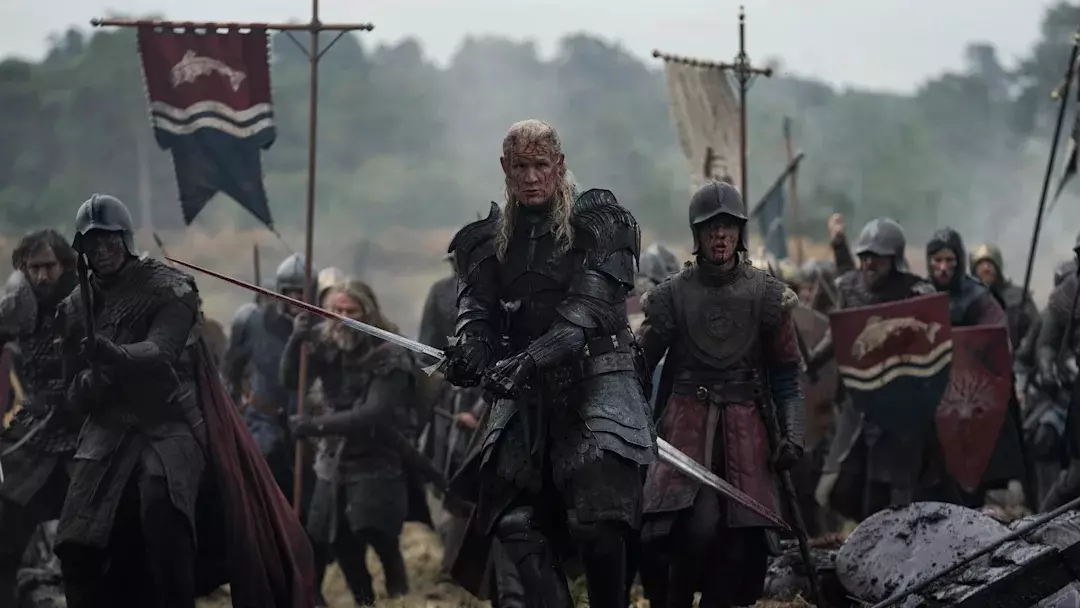
Daemon's forces, supported by Riverlanders and Northmen, attack Tumbleton, where Lord Ormund Hightower has prepared a brutal defence. The battle erupts into street fighting, siege warfare, arrows, dragonfire and devastating destruction.
House of the Dragon Season 3 makes that scale impossible to ignore.
After episodes spent moving political pieces around the board, Tumbleton finally delivers the sprawling warfare viewers had been waiting for.
The Forbes finale review praised the sequence as one of the show's strongest action set pieces, particularly because the series finally pulls back from intimate council chambers and shows the war on a much larger scale.
But Tumbleton also proves that dragons do not guarantee loyalty.
Ulf is supposed to fight alongside Daemon's forces. Instead, after being humiliated and pushed around by Ormund, he turns his dragon against the army he was meant to protect.
His betrayal leaves Tumbleton devastated and changes the balance of the conflict.
It also gives earlier episodes more weight. Forbes' Season 3 coverage had already highlighted the growing frustration of Ulf and Hugh Hammer, showing that their loyalty was becoming fragile.
Hugh's future is less certain. After finding his wife dead, he is left grieving, and the finale leaves open the question of where his loyalty will eventually lie.
Daemon also comes close to death during the battle, facing Ser Jon Roxton before a collapsing building separates them. Corlys eventually helps him escape.
The moment reinforces how dangerous the war has become. Daeron's fate is another major question. The finale does not clearly establish what happened to him amid the destruction at Tumbleton, leaving the door open for further developments.
Img Src : Deccan Chronicles
The show has taken several liberties with Fire & Blood. Rhaenyra is arguably even more ruthless in the book, while Maelor is absent and Helaena's death is handled differently.
Tumbleton has also been substantially reworked for television, with Ormund given a more active strategic role. Ulf and Hugh are portrayed differently too, with Hugh receiving a more sympathetic identity than his book counterpart.
These changes show how the series is reshaping a fictional history built around conflicting accounts.
The distinction is important for readers comparing the two versions: what happens in the show should not automatically be treated as identical to what happens in Martin's book.
House of the Dragon Season 3 leaves major questions unanswered. House of the Dragon Season 4 will have to resolve Rhaenyra's fragile alliances, Aegon's comeback, the Aegon-Aemond relationship, Hugh's future and Daeron's fate.
HBO officially confirmed that Season 3 had eight episodes and concluded on August 9, 2026. HBO's official Season 3 announcement The fourth season is set to be the show's conclusion; Variety reported that HBO plans its release for 2028. Variety's report on the final season
That makes the unresolved character arcs even more important. There is now very little room for the Targaryens to keep delaying the consequences of their choices.
So, is Aegon really the character viewers should be rooting for?
Not exactly.
Aegon is not suddenly good, just as Rhaenyra is not suddenly evil. The war has stripped away the easy answers.
Rhaenyra has gained power but lost some of the qualities that once made viewers sympathise with her. Aegon has lost almost everything—and, strangely enough, that has made him easier to understand.
By the end, the question is no longer simply who deserves the Iron Throne.
It is whether anyone can win the Targaryen civil war without becoming someone the audience no longer recognises.
And that may be the most compelling thing about the Dance of the Dragons: the closer these characters get to power, the less recognisable they become.
Everything you need to know
Aegon's suffering, vulnerability and changing relationship with Aemond have made him more relatable, even though he remains deeply flawed.
Her losses, political pressure and determination to reclaim the throne push her toward increasingly forceful and uncompromising decisions.
The finale centres on the Battle of Tumbleton, major betrayals, Helaena's death and significant changes in the balance of power.
Yes. The season gives Aegon greater vulnerability and emotional depth, making him more sympathetic than he was earlier in the series.
Yes. The fourth season has been confirmed as the show's final season and is currently expected in 2028.




Sep 25, 2026
TUI Staff
Sep 25, 2026
TUI Staff
Sep 24, 2026
TUI Staff
Sep 23, 2026
TUI Staff
Sep 25, 2026
TUI Staff
Sep 25, 2026
TUI Staff
Sep 25, 2026
TUI Staff
Sep 24, 2026
TUI Staff

Stay informed with independent, fact-checked journalism on technology, environment, government, economy and more. India’s most trusted digital news platform.



Comments (0)
Be the first to comment!