
Should Hindi Be Our India's National Language? - Hindi Diwas Special Feature!
Hindi: Our National Identity
 IN
Mon, Oct 05, 2026 | 03:47 AM IST
IN
Mon, Oct 05, 2026 | 03:47 AM IST

Every year on September 14th, India celebrates Hindi Diwas to honor the adoption of Hindi as one of the official languages of the country. However, the question of whether Hindi should be declared the "National Language" of India remains a topic of heated debate. This discussion isn't just about language; it's deeply intertwined with India's cultural diversity, history, and politics.
On the ocassion of Hindi Diwas 2024, we wish to delve into the significance of Hindi as a mother tongue, the reasons behind its widespread use, and why it hasn't been declared the national language to date. We will also explore the arguments for and against making Hindi the national language and how such a decision could impact India's social and cultural fabric.
The Importance of Hindi as a Mother Tongue
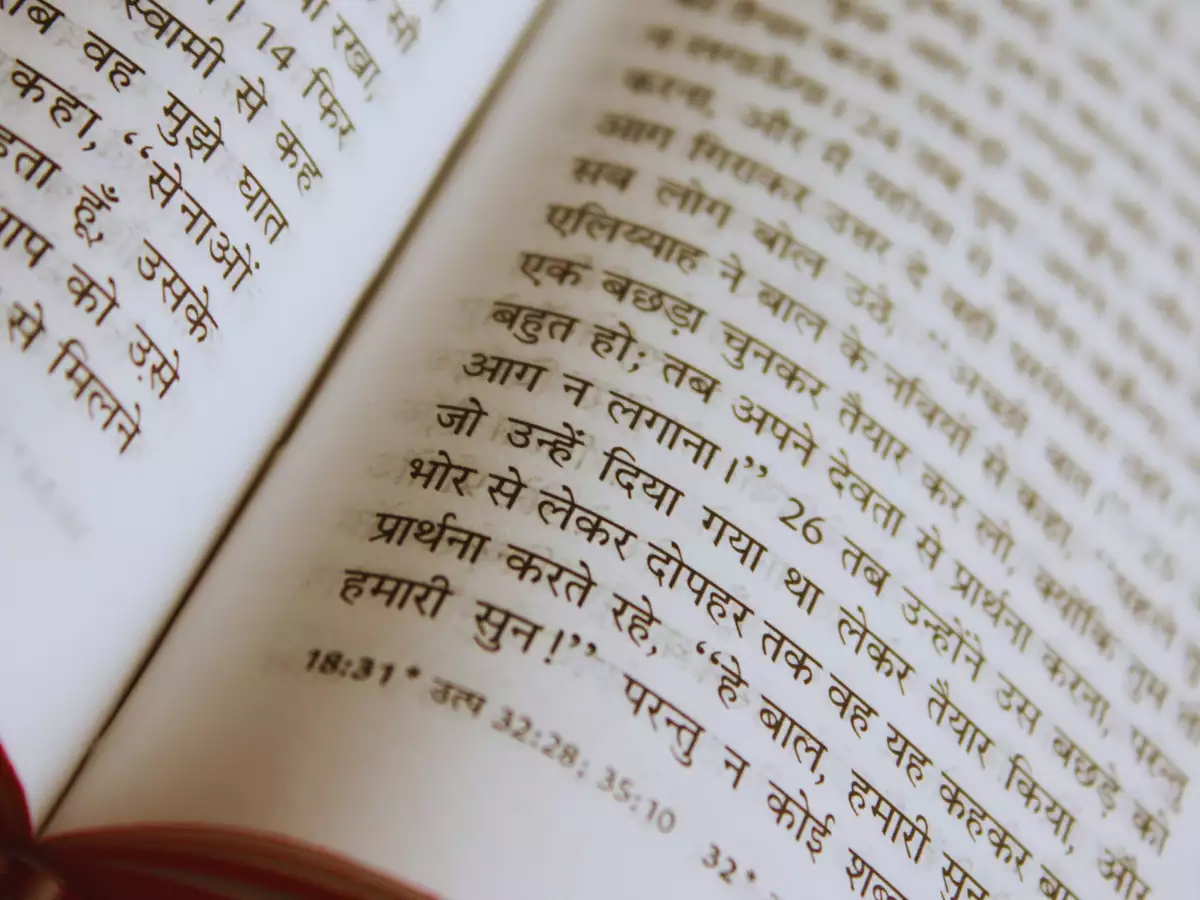
Hindi, an Indo-Aryan language, is spoken by over 600 million people worldwide, has a significant presence in India. It is the mother tongue of nearly 44% of the Indian population, according to the 2011 Census of India. It is primarily spoken in the northern and central parts of the country, including states like Uttar Pradesh, Bihar, Madhya Pradesh, Rajasthan, and Haryana. As the third most spoken language in the world, after English and Mandarin, Hindi serves as a unifying medium of communication for millions of Indians both within the country and abroad.
Hindi holds immense cultural significance, as it is deeply rooted in Indian traditions, literature, and arts. Classical and modern Hindi literature, including the works of prominent authors like Premchand, Harivansh Rai Bachchan, and Mahadevi Verma, are cherished by millions of Hindi speakers. Hindi films, songs, and television shows also play a significant role in shaping the cultural identity of Hindi-speaking communities. The language is also a bridge that connects people with India's rich heritage, religious texts, and folklore.
The Constitutional Status of Hindi
After India gained independence in 1947, there was a need to unify the nation under a common language to foster national integration. Consequently, in 1950, the Constituent Assembly of India adopted Hindi, written in the Devanagari script, as one of the official languages of India under Article 343 of the Indian Constitution. English was retained for official purposes for a stipulated period, which has since been extended indefinitely to ensure smooth governance and communication across states with different linguistic backgrounds.
It's important to note that Hindi is not the "national language" of India but an "official language" alongside English. This distinction exists because of India's linguistic diversity. The country is home to 22 scheduled languages recognized by the Constitution, and several states have their own official languages. Declaring one language as the "national language" could risk alienating non-Hindi-speaking communities.

Why Hindi Has Not Been Declared the National Language
Arguments in Favor of Declaring Hindi as the National Language
Arguments Against Declaring Hindi as the National Language
Conclusion
The debate over whether Hindi should be declared the national language of India is complex and multifaceted. While Hindi has undeniable cultural, historical, and linguistic significance, the idea of imposing a single language on a multilingual nation like India may not be practical or desirable. India's strength lies in its diversity, and this extends to its linguistic heritage. Rather than declaring a national language, the focus should be on promoting all Indian languages and ensuring that they flourish alongside one another.
As we celebrate Hindi Diwas 2024, it is crucial to recognize the importance of Hindi as one of India's official languages and a cultural bridge that connects millions of people. At the same time, we must honor and respect the rich linguistic diversity that makes India truly unique. Only by embracing our multiplicity can we hope to build a more inclusive and harmonious nation.
Everything you need to know
No. Hindi is not the national language of India. The Constitution recognizes Hindi (in Devanagari script) and English as the official languages of the Union, but India has no national language.
Hindi Diwas is celebrated every year on September 14 to commemorate the adoption of Hindi as one of the official languages of India by the Constituent Assembly in 1949.
Hindi has not been declared the national language because India is a linguistically diverse country with 22 scheduled languages. Making one language the national language could marginalize non-Hindi-speaking communities and disrupt the spirit of "Unity in Diversity."
An official language is used for government administration and official communication, while a national language symbolically represents a nation's identity. India has official languages but does not have a constitutionally recognized national language.
According to the 2011 Census, around 44% of Indians speak Hindi as their mother tongue, making it the country's most widely spoken native language and one of the most spoken languages in the world.




Oct 03, 2026
TUI Staff
Oct 03, 2026
TUI Staff
Oct 03, 2026
TUI Staff
Oct 03, 2026
TUI Staff
Oct 03, 2026
TUI Staff
Oct 03, 2026
TUI Staff
Oct 03, 2026
TUI Staff
Oct 03, 2026
TUI Staff

Stay informed with independent, fact-checked journalism on technology, environment, government, economy and more. India’s most trusted digital news platform.







Comments (0)
Be the first to comment!